Material
Bamboo does not by itself describe pressure, cleaning or skin contact.
Cupping technique guide
Material, heat and movement change the questions you should ask before choosing a cupping method.
Quick answer
Bamboo refers to cup material or style, fire adds a heat question and moving cupping adds friction and product questions.
Ask whether skin stays intact, how heat and pressure are controlled, how reusable cups are cleaned and what aftercare applies.
A traditional name does not prove a health outcome or remove the need for consent.
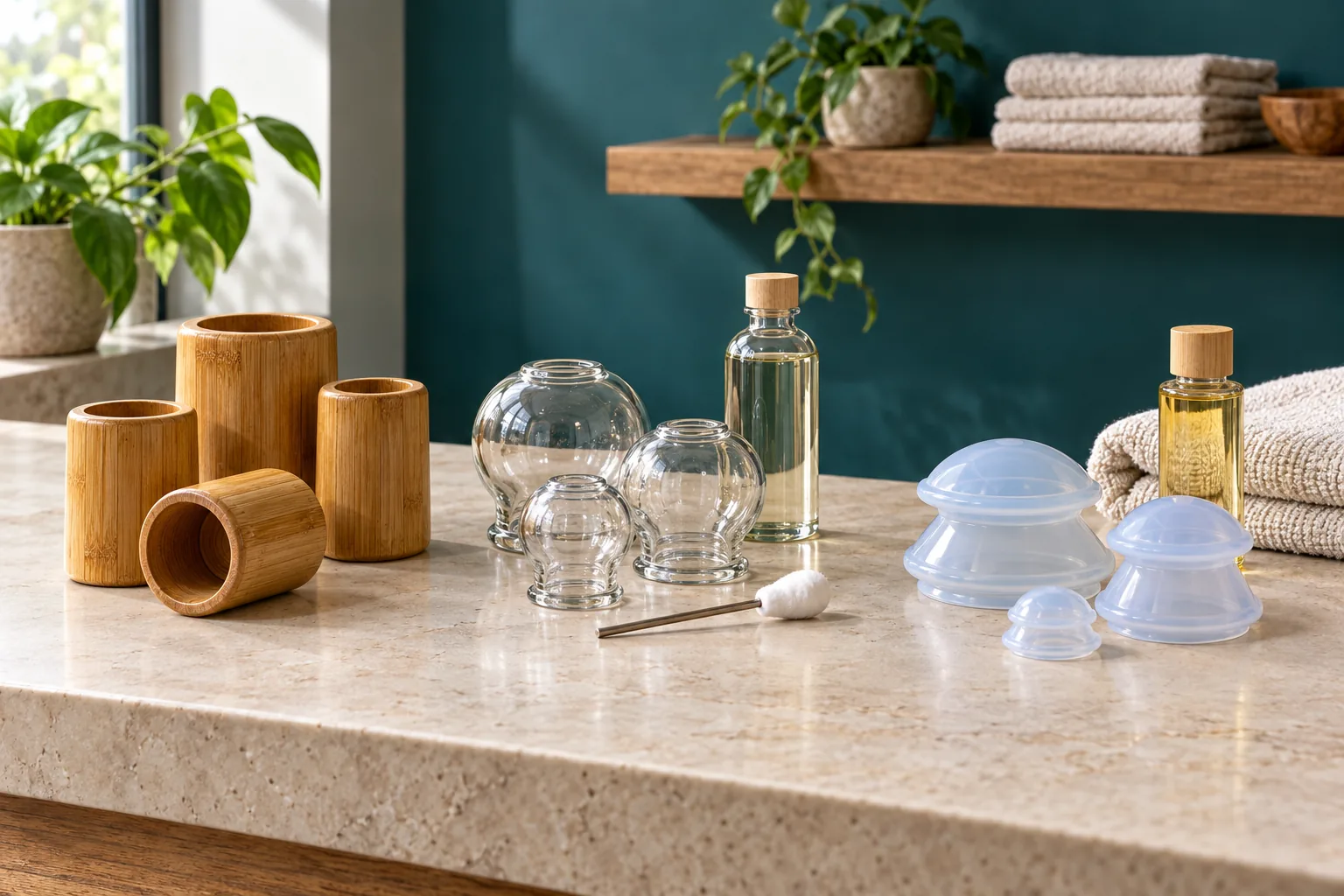
Bamboo cupping, fire-assisted cupping and moving cupping are not three names for an identical experience. Bamboo usually identifies the cup material or style. Fire-assisted cupping uses a flame as part of creating negative pressure before a cup is placed; the flame should not be applied to the skin. Moving cupping involves sliding a cup across lubricated skin rather than leaving every cup stationary. A provider may combine features, so ask for the complete sequence rather than choosing from a photograph.
NCCIH explains that cupping creates suction using cups made from materials including glass, ceramic, bamboo or plastic. Negative pressure may be created with a flame or a suction device. It also distinguishes dry cupping, which does not pierce skin, from wet cupping, in which skin is pierced and blood enters the cup. Material, suction and movement do not tell you whether skin will be broken. Ask that question separately.
| Variant | Extra question | What should be controlled | Aftercare focus |
|---|---|---|---|
| Bamboo cup | Is the cup reusable, intact and suitable for the proposed method? | Processing, dryness, rim condition and suction | Skin marks, tenderness and any reaction |
| Fire-assisted cup | How is heat kept away from skin and flammable materials? | Flame workflow, cup temperature and rapid release | Burn signs as well as ordinary suction response |
| Moving cup | What product and movement path will be used? | Product sensitivity, friction, pressure and duration | Irritation, tenderness and clothing friction |
This table is for questions, not a do-it-yourself guide. Fire and suction should be handled only within the provider’s method, equipment instructions and safety controls. Do not ask someone to copy a social-media demonstration or increase heat, pressure or movement for a darker mark.
Ask whether the bamboo cups are single-person, single-use or reusable, and what validated processing applies between people. The material can hide moisture, residue or damage differently from transparent glass or plastic, so the provider should inspect rims and surfaces before use. Ask how cups are dried and stored after processing and how a cup is removed from service when cracked, rough or otherwise compromised.
Do not assume that a natural material is automatically gentler, cleaner or safer. The relevant questions are whether the cup is intact, compatible with the intended cleaning or sterilisation process, and used on suitable skin with controlled suction. If wet cupping is proposed, ask how blood contamination changes the equipment workflow. NCCIH warns that inadequately sterilised reusable equipment can spread bloodborne infections.
The purpose of flame in traditional fire cupping is to help create negative pressure in the cup before placement; it is not a treatment to the skin. Ask where ignition occurs, how flame is kept away from you, how the practitioner checks the cup before placement, what flammable liquids or materials are controlled, and how a cup is released quickly. The room should have a clear safety process, not an improvised flame beside loose fabric, hair, oxygen equipment or clutter.
Ask whether you will feel residual warmth and what would indicate excessive heat. Burning, sharp heat, smoke contacting you or a cup that feels too hot requires an immediate stop. Do not accept the explanation that a burn is a necessary detox reaction. NCCIH includes burns among possible cupping adverse effects; heat therefore adds a distinct risk that must be discussed before consent.
Moving a cup introduces friction and usually a product that allows it to glide. Ask what oil, lotion or other medium is proposed, request the ingredient information if you have allergies or sensitive skin, and ask whether a patch or alternative is appropriate. Confirm the movement path, body area, pressure and duration. The cup should not be dragged across broken, infected, actively inflamed or otherwise unsuitable skin.
Tell the provider about eczema, psoriasis, recent shaving or hair removal, sunburn, adhesive reactions and products already on the skin. NCCIH notes that cupping may worsen eczema or psoriasis. Stop for painful dragging, burning, pinching, rapidly increasing redness, blistering or a product reaction. “Moving” should not mean uncontrolled or fast.
Describe the broad reason for enquiring and whether the concern has been assessed. Share relevant medicines, bleeding or bruising history, skin conditions, poor healing, altered sensation, recent surgery and any current infection or wound. Do not stop prescribed medicine or fast for a procedure without appropriate advice. Ask whether the proposed method is dry or wet and whether the body area has a reason to postpone.
A severe, new or rapidly changing symptom, significant injury, fever, spreading infection, major swelling, new weakness or numbness, or another concerning change needs appropriate assessment rather than a choice of cup. Cupping marks cannot diagnose the cause of pain or confirm that an area is safe to treat.
Agree the cup material, suction method, stationary or moving technique, product, heat involvement, body area and whether skin remains intact. A provider should not add fire, movement, stronger suction or skin piercing after obtaining general consent for “cupping.” Each addition changes the experience and may change risk and aftercare. Confirm privacy, draping and a stop signal before positioning.
Ask the practitioner to show how suction will be released. You should be able to pause because of discomfort or simply because you changed your mind. Tolerating one cup does not require accepting more cups or a longer session.
Report burning, sharp pinching, severe pain, numbness, dizziness, faintness, breathlessness or distress immediately. With moving cupping, report painful friction or a product reaction. With fire-assisted cupping, any excessive heat should trigger release and a skin check. The provider should observe the skin and your comfort rather than leaving the room without an agreed way to call for help.
Darker marks are not a reason to increase suction, time or heat. NCCIH says temporary skin marks occur, but it does not validate interpreting their colour as a map of toxins or disease. The useful record is the exact method, exposure, skin response and how you feel—not the drama of the mark.
Ask how to care for marked or tender skin, when to wash, what products to avoid, and when normal exercise, tight clothing or water exposure can resume. For moving cupping, remove residual product as advised and monitor for delayed irritation. For bamboo or other reusable cups, aftercare still concerns your skin; equipment processing remains the provider’s responsibility.
If a burn occurs, stop the procedure. NHS guidance says burns and scalds should be cooled under cool running water for 20 minutes as soon as possible, without removing material stuck to skin, and that creams, oils or butter should not be applied. Large, deep, facial, genital, chemical or electrical burns need emergency assessment, and uncertainty about a burn warrants urgent advice. Do not cover up a burn as an ordinary cupping mark or apply the same oil used for moving cups.
Seek appropriate care for blistering, severe or worsening pain, spreading redness, swelling, pus, fever, persistent discoloration or another concerning response. Contact the clinic for documentation, but do not delay medical care.
NCCIH reports that most cupping research is low quality, that evidence for reducing pain is not strong, and that there is not enough high-quality evidence to conclude whether cupping helps other conditions. That broad evidence does not establish that bamboo, fire or moving cupping is superior to another cup material or suction method. A traditional history or visually distinctive technique is not proof of a health result.
Ask what realistic outcome is being proposed, over what time, and what would make the provider stop recommending sessions. Review comfort, function, skin effects and practical burden. Do not use a temporary mark, warmth or relaxation as proof that a disease has been treated.
A clear enquiry may reveal that a simpler method, a later date or no cupping is the better choice. The material and visual style should never outrank screening, consent and safe execution.
Key takeaways
Bamboo does not by itself describe pressure, cleaning or skin contact.
Fire-assisted methods need explicit burn-prevention questions.
Moving cups add friction, oil and skin-response considerations.
A traditional name does not prove a health outcome or remove the need for consent.
This editorial guide is general education. It does not diagnose a condition, confirm suitability or promise a clinical result.
Practical checklist
Appointment enquiry
Ask for the exact cup, heat, movement and cleaning plan before travelling.

Continue learning
Compare the exact method, read the safety framework and return to the Insights hub before you enquire.
Frequently asked
Not automatically; ask what technique is intended.
Yes, temporary skin changes can occur.
No. Heat adds burn risk and needs clear controls.