First time
Allow extra time to see how your skin responds.
Timing and planning guide
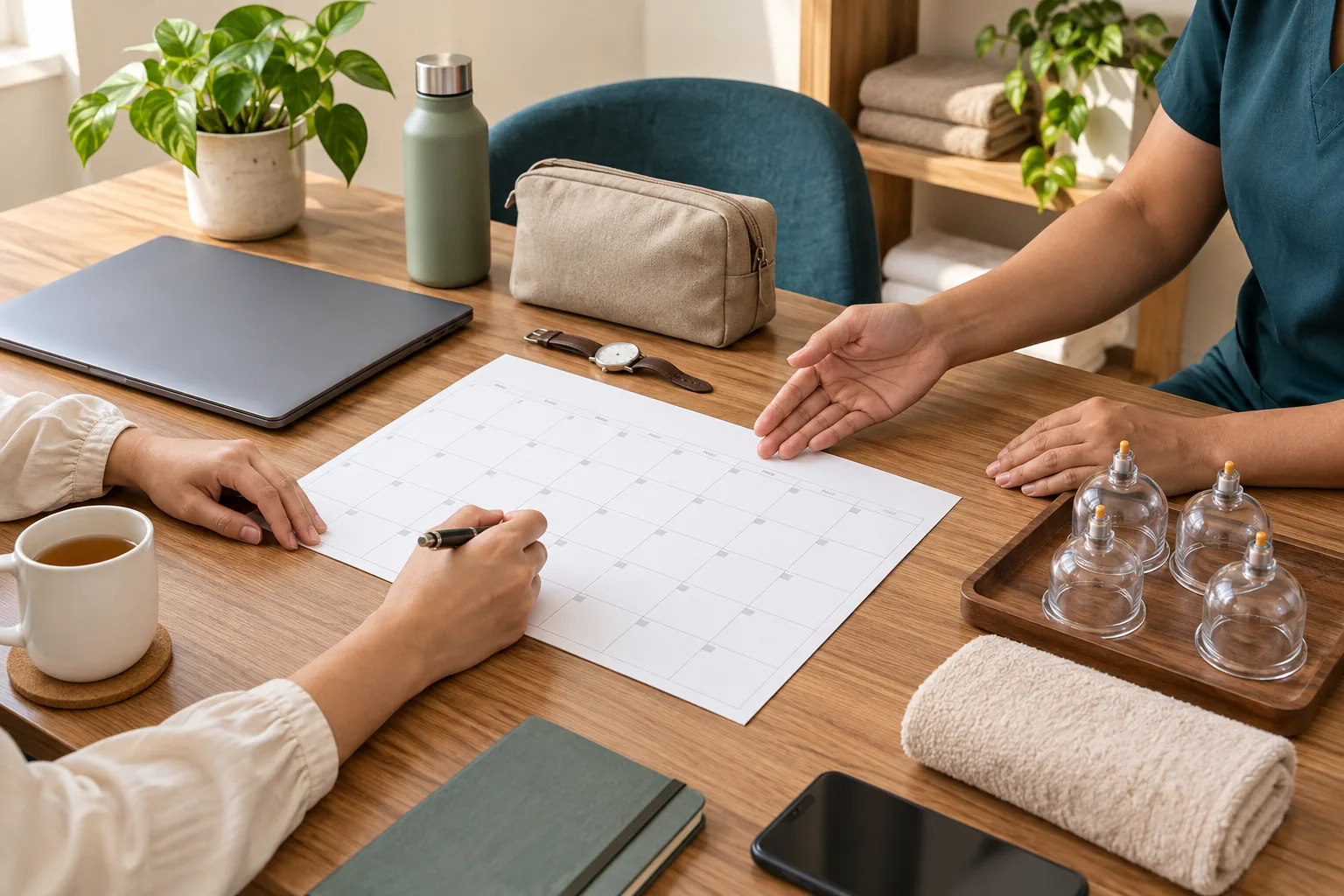
Calendar planning is an important part of informed consent when marks, tenderness or wound care could affect the next several days.
Quick answer
The first session or an invasive method may not feel exactly as expected, so avoid booking immediately before an important event.
Ask about likely marks, activity, clothing friction, travel, water exposure, dressing and when to seek help. Confirm the appointment and route before leaving.
Timing guidance does not make an unsuitable method safe or provide medical clearance.
Planning around work, travel, sport or an important event begins with the exact procedure. Dry cupping may leave temporary marks or tenderness while keeping the skin intact. Wet cupping includes skin piercing and therefore adds bleeding control, a dressing, wound hygiene and access to help if a problem develops. Moving or fire-assisted methods add friction, products or heat. A generic answer about “recovery time” is not useful until those details are clear.
There is no universal number of days that guarantees marks will disappear or that every person will feel the same. Skin tone, pressure, duration, body area, method and individual response vary. Ask what the provider commonly explains, then leave extra room when it is your first session, a new body area or an invasive technique. Do not schedule around a promise that there will be no visible change.
Look beyond the appointment itself. Consider the journey home, clothing, bathing, physical work, sleep position, sport, access to a clean place for dressing care and the ability to contact the clinic. A desk-based day, a hot outdoor shift, a long train journey and a formal event create different practical pressures even when the method is the same.
| Plan | Discuss before booking | Backup option |
|---|---|---|
| Work shift | Uniform friction, lifting, heat and dressing access | Choose a lower-demand day or postpone |
| Travel | Journey time, clean supplies, contact access and luggage | Book after return if aftercare would be difficult |
| Sport | Movement, sweat, contact, equipment straps and existing restrictions | Follow the rehabilitation or sports plan first |
| Important event | Visible area, clothing, photography and uncertain marks | Allow more time or choose not to proceed |
Tell the provider about tight uniforms, protective equipment, shoulder straps, repetitive movement, lifting, heat, sweat and limited access to handwashing or a private place to check a dressing. Do not assume that working through tenderness is harmless, and do not use a session as medical clearance for a demanding task. If the original symptom affects safe work, appropriate occupational or clinical advice may be needed.
For visible areas, decide whether marks or a dressing matter in your role and whether clothing can cover the area without rubbing. Privacy is a valid planning consideration. You do not owe colleagues an explanation of cupping marks, but a healthcare professional may need to know their origin so they are not misinterpreted.
Before a journey, confirm the method, expected temporary effects, how long initial monitoring is sensible and what would make travel inappropriate. Plan clean dressings and hand hygiene when wet cupping is involved, and keep the clinic's contact details accessible. Do not pack an aftercare product unless its use has been explained. A sealed, simple supply plan is safer than improvising with fragranced cosmetics or shared toiletries.
Check whether the route involves long periods in one position, heavy luggage, heat, swimming or limited access to care. These factors do not create a universal ban, but they can make an unfamiliar reaction or wound problem harder to manage. If you would be unable to obtain help for persistent bleeding, increasing pain or infection signs, scheduling after the trip may be the more practical choice.
Ask how the proposed body area interacts with movement, sweat, friction, contact sport, straps and existing rehabilitation instructions. A cupping provider should not clear an injury for return to sport merely because pain feels different after a session. Strength, control, tissue recovery and sport-specific safety need appropriate assessment.
Keep prescribed exercises and restrictions unchanged unless the responsible clinician modifies them. If the skin was pierced, obtain instructions for dressing, showering and activity. Stop and seek advice for worsening pain, new weakness or numbness, major swelling or another symptom that suggests more than expected local tenderness.
Weddings, interviews, performances, examinations and religious or family occasions can involve clothing, photographs, travel, sleep changes and limited time for aftercare. Avoid experimenting with a first invasive session or an unfamiliar product immediately beforehand. Even an uneventful appointment may produce marks that remain visible longer than hoped.
Do not ask the practitioner to use stronger suction to “finish the effect” sooner or to place cups in an unplanned area simply to hide marks. A cosmetically convenient site is not automatically suitable. The option not to proceed is often the most predictable plan.
If any of these remain unknown, treat the slot as an enquiry rather than a completed plan. Build travel time without rushing, and arrange a safe journey home if you are concerned about dizziness or your first response to a procedure.
Previous experience with one cup, body area or non-invasive method does not predict the response to every other technique. A first wet-cupping appointment, a new product, a different body area or a device-assisted method deserves more calendar space than a familiar routine. Ask the provider what will be new and resist combining several new techniques in one session immediately before travel.
A repeat appointment still needs screening when health, medicines, skin or plans have changed. Tell the provider about any delayed reaction from the previous session, not only what happened before you left the room. A pattern of increasing marks, prolonged tenderness or difficult wound care is a reason to review the plan, not evidence that the body requires a stronger session.
The first window is preparation: confirmation, travel, clothing and current-health screening. The second is the session itself, including time for questions rather than rushing directly to the procedure. The third is aftercare: the journey home, an early check of the site and access to help. If your schedule can accommodate only the middle window, it may not accommodate the appointment safely.
You may pause or stop even if you have travelled far, taken leave or paid a deposit. Report burning, sharp pain, dizziness, nausea, unexpected bleeding or a worsening of the original symptom. Do not accept a stronger method simply because this is the only day available. If the agreed technique changes, ask for a new explanation and make a fresh decision.
Ask the provider to record the method, area and any product used. That information helps if a reaction develops while you are away. Do not rely on mark colour as a measure of success or a timetable for recovery.
For intact skin, protect a tender area from avoidable friction and follow the advice given for washing and products. For wet cupping, NHS wound guidance supports basic priorities such as controlling bleeding, cleaning a minor wound and covering it with a clean or sterile dressing. Keep the dressing clean and dry as instructed and wash your hands before touching it.
Do not begin or continue a journey with bleeding that is not controlled. Seek appropriate care for spreading redness, increasing swelling or pain, pus, fever, a burn, loss of sensation or feeling generally unwell. Severe breathing, neurological or trauma symptoms take priority over an event itinerary.
Good planning does not promise an uncomplicated recovery. It makes the decision transparent and prevents work, travel or an event from pressuring you into an unsuitable or poorly timed procedure.
Key takeaways
Allow extra time to see how your skin responds.
Plan clean aftercare, supplies, transport and contact access.
Do not chase darker marks or introduce a new invasive technique immediately before a milestone.
Timing guidance does not make an unsuitable method safe or provide medical clearance.
This editorial guide is general education. It does not diagnose a condition, confirm suitability or promise a clinical result.
Practical checklist
Appointment enquiry
Share your calendar and method enquiry so timing and aftercare can be discussed before confirmation.

Continue learning
Compare the exact method, read the safety framework and return to the Insights hub before you enquire.
Frequently asked
There is no universal interval; allow enough time for an unfamiliar response and ask the practitioner.
Ask for method-specific advice and do not use a session as return-to-sport clearance.
Confirm wound care, dressing, cleanliness, transport and contact options before travelling.