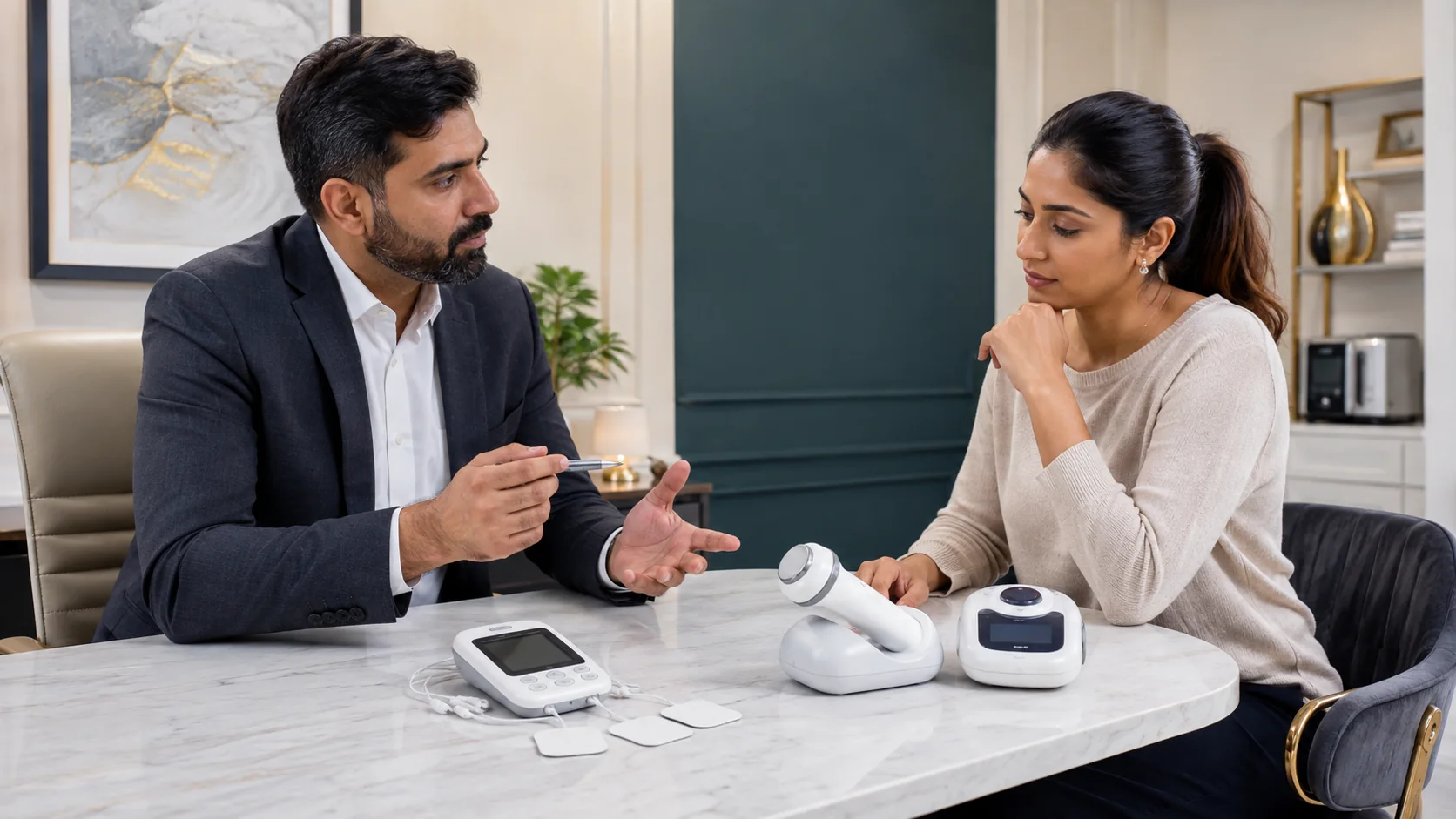
Name the machine and the decision
Translate a device label into a specific appointment plan
Words such as TENS, IFT, shockwave, therapeutic ultrasound and electro-cupping describe different approaches, not a single level of “advanced therapy.” Even within one label, equipment, intended use, contact method and settings can differ. Begin by asking for the exact device or modality proposed for your appointment and what problem the practitioner believes it is intended to address. Then ask who will operate it, which body area is involved and what other options exist, including doing nothing or seeking a different assessment. A booking page can introduce a service, but it cannot establish that the device is suitable, available that day or supported for every goal.
Ask for a plain-language equipment description
You should be able to understand whether the method uses adhesive electrodes, electrical leads, suction cups, an applicator, gel, pressure, vibration, heat or another form of contact. Ask what touches the skin, whether anything penetrates it and how the equipment is cleaned between visitors. For a device with adjustable intensity, ask what the control changes and who is allowed to change it. If a practitioner uses a marketing name rather than a standard device name, ask them to describe the physical setup. A picture of a console is not enough: the pads, leads, cups, applicators and contact materials are part of the method and its safety questions.
Match the device question to the actual goal
“Pain relief” is too broad to confirm suitability. Describe the body area, duration, medical assessment already received and effect on function. Say whether the aim is comfort during an ordinary activity, support alongside a rehabilitation plan or simply understanding an option. The practitioner should explain what outcome is realistic to review and what the device cannot establish. It should not be used to diagnose the cause of pain, prove tissue healing or clear you for work or sport. When a new, severe or worsening symptom is present, choose appropriate medical assessment rather than using a device session as a trial that might temporarily change sensation.
Prepare a screening list before the visit
Write down diagnoses, implanted or worn electronic devices, altered sensation, active skin problems, pregnancy, recent surgery or procedures, relevant medicines and any new neurological or systemic symptom. The importance of each detail depends on the exact device and body area, which is another reason the label must be confirmed. Do not assume that a device is safe because it is non-invasive or available without a prescription elsewhere. Do not remove or adjust a medical device, dressing or prescribed support for a wellness treatment without guidance from the responsible clinician. If a question falls outside the practitioner’s role, referral is a useful answer rather than a failure.
Understand operator control and maintenance boundaries
Ask who has been trained to operate the proposed equipment and whether the person present will remain responsible for placement and settings. A certificate title alone does not explain competence with every machine. The practitioner should follow the relevant device instructions, check the equipment before use and keep it maintained. You do not need access to confidential business records to ask how faults, damaged cables or worn contact parts are identified. A device should not be used when its controls, leads, applicator or cups appear damaged or improvised. Availability should also be confirmed before travel; an image on the website does not guarantee that a specific machine is currently in service.
Agree on sensation limits and an immediate stop signal
Before the device starts, ask what you may feel and which sensations are unexpected. “More is better” is not a safe operating rule. You should know how to ask for lower intensity or an immediate stop, and the practitioner should be able to stop without treating discomfort as resistance to healing. If you have reduced sensation, explain that because you may not detect pressure, temperature or electrical discomfort normally. Report sharp pain, burning, sudden weakness, spreading numbness, dizziness or any concerning change. A screen reading or preset does not replace communication with the person receiving the method, and your consent continues after the machine is switched on.
Ask about contact materials and skin checks
Electrodes, gels, adhesives, cups and applicators can affect the skin differently. Mention relevant allergies or previous reactions and ask how the area will be checked before and after use. Know whether marks, temporary redness, tenderness or adhesive irritation are expected for the exact setup. Ask how reusable contact parts are cleaned and how single-use parts are identified. If suction and electricity are combined, clarify both controls rather than treating the method as ordinary cupping. Skin that is broken, infected, recently operated on or otherwise concerning may change the decision and needs appropriate assessment; a device setting cannot make unsuitable skin appropriate.
Compare options without comparing buzzwords
When two services are presented, compare the proposed purpose, evidence, risks, body contact, screening, operator, time, aftercare and cost only after the exact methods are clear. A larger machine, a louder sound or a digital display does not prove greater effectiveness. “Medical grade,” “advanced” and “latest technology” are incomplete statements without an intended use and evidence boundary. Ask why one option is being proposed instead of another and what would lead the practitioner to postpone or refer. A good comparison may conclude that neither option should proceed until a symptom has been assessed. That is more useful than choosing the most impressive-looking device from a gallery.
Plan the follow-up before booking
Ask how the result will be reviewed, over what period and what would count as no benefit or an adverse effect. Choose a modest function measure rather than a vague promise: comfort during a normal walk, tolerance of a routine task or ability to follow the existing exercise plan without a new reaction. Continue prescribed care unless the responsible clinician changes it. After the session, record the device name, body area, settings only if provided, immediate skin response and any later change. Do not increase frequency or intensity based solely on a temporary feeling. If symptoms worsen or warning signs appear, use appropriate medical care rather than waiting for the next device appointment.
Confirm practical details for a Kolkata visit
- Exact device or modality and current availability are confirmed before travel.
- The operator, body area, contact materials and expected sensation are explained.
- Screening includes implants, altered sensation, skin condition, medicines and recent procedures where relevant.
- A stop signal, setting control and aftercare route are agreed before use.
- The appointment time leaves room for screening and a calm journey home within the clinic’s stated hours.
Recognise an answer that is not complete enough
Be cautious when a reply guarantees results, refuses to name the equipment, treats every pain complaint the same or says there are no meaningful screening questions. A responsible explanation can acknowledge uncertainty, evidence limits, alternatives and the possibility of postponement. It should not ask you to ignore a clinician’s advice or to change prescribed medicine. Ask the clinic to confirm the exact device, method and person expected for your appointment. The decision is not whether technology looks modern; it is whether a specific method, used by an appropriate person under a clear plan, fits your current situation without delaying better-suited care.