
Two screens
Needle and electrical-device risks both matter.
Needle and device guide
When needles and electrical stimulation are combined, both parts need an explicit safety conversation.
Quick answer
Ask what is inserted, where current travels, how settings are chosen and what training and scope apply.
A responsible enquiry covers implants, skin and sensation, medicines, bleeding risk, sterile single-use needles, sharps disposal and the right to stop.
The method should not be promoted as a guaranteed cure or used instead of medical care.
Electro-acupuncture combines skin-penetrating needles with electrical stimulation. That means informed consent must cover both parts: the invasive needle procedure and the powered device. A person may be comfortable with acupuncture but not electrical current, or may accept surface stimulation but not needles. Ask the provider to explain each component separately before describing how they are connected. Consent to one does not automatically authorise the other. Write down the device name and proposed body area so the explanation stays specific.
The booking conversation should identify the body area, number and type of needles, the electrical unit, connection method, adjustable settings, expected sensation, session length, practitioner role and aftercare. It should also explain what the method cannot do. A needle-and-device session cannot diagnose unexplained pain, confirm that a nerve or muscle is damaged, or promise a cure. When symptoms are severe, new, rapidly worsening or neurologically concerning, appropriate medical assessment comes first.
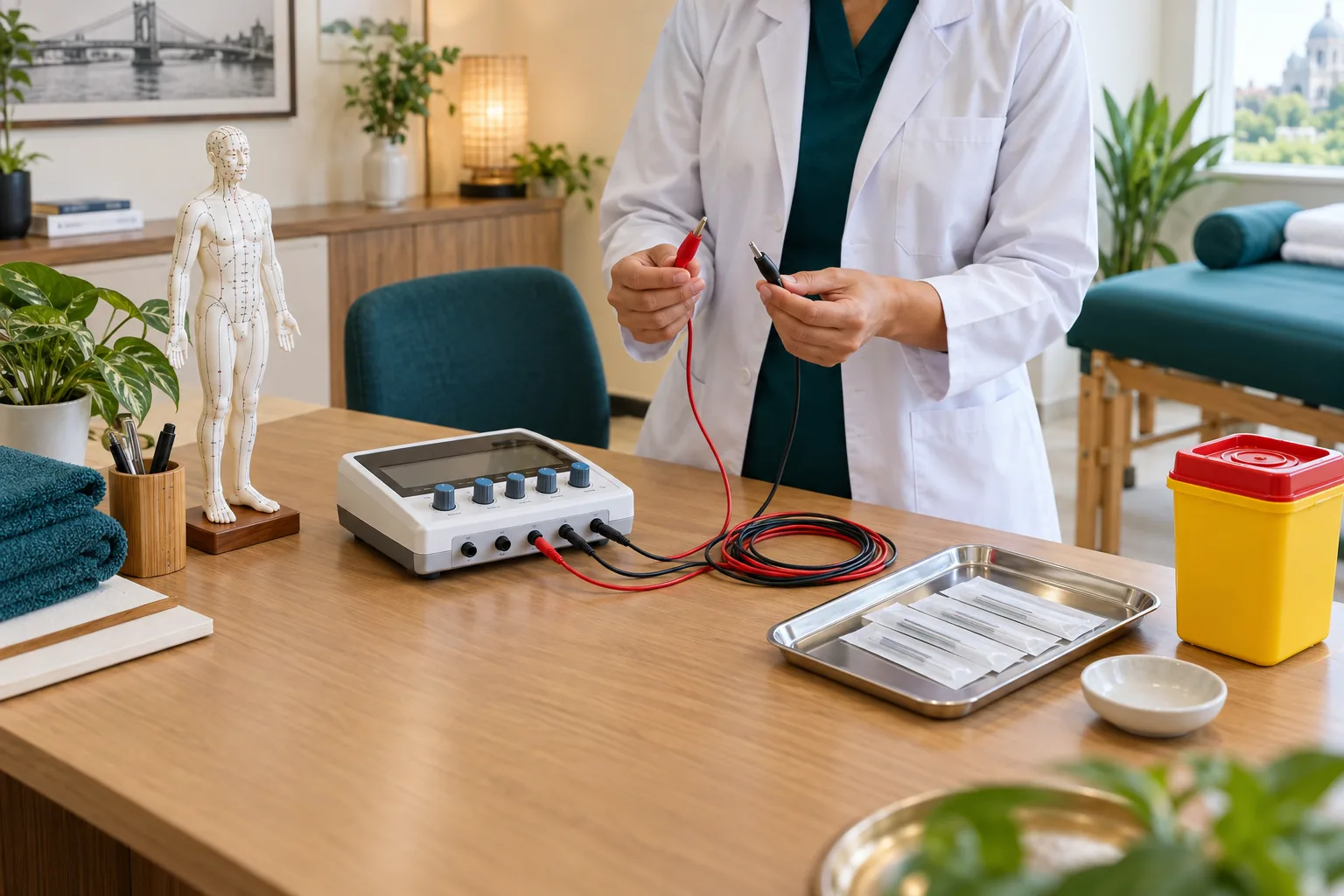
Request the manufacturer and model of the electrical unit and ask to see how leads connect to needles. Ask how many channels may be used, which body areas are included and who remains responsible for the controls throughout the session. The operator should be able to describe how the unit is turned off immediately and what happens if a lead loosens or a needle shifts. You do not need to interpret technical settings; you do need a plain-language account of what changes when a control is adjusted.
If the provider cannot separate these answers, the combined explanation is incomplete. “Low current” and “very fine needles” are descriptions, not a safety plan.
Tell the clinic about a pacemaker or any implanted electronic or cardiac device at the first enquiry, not after needles are placed. NHS pacemaker guidance tells people to show their pacemaker identification card to doctors, dentists and other healthcare professionals before treatment. Bring or describe the card details and seek advice from the healthcare team responsible for the implant when electrical stimulation is proposed. Do not assume that distance from the implant makes a setup safe.
Also disclose epilepsy, pregnancy, altered or reduced sensation, recent surgery, a current infection, skin disease, a bleeding disorder and medicines relevant to bleeding or healing. This is not a universal approval or refusal list. It gives the provider enough context to check the device instructions, remain within scope and refer for appropriate advice. If an answer depends on your cardiology or medical team, postponing is safer than improvising.
CDC Standard Precautions are intended for all patient care and use risk assessment, hand hygiene, appropriate personal protective equipment, safe handling of equipment, environmental cleaning and proper sharps practices. Ask how those principles appear in the room. The practitioner should perform hand hygiene, prepare a clean field, protect unused supplies from contamination and dispose of used needles immediately into a suitable sharps container at the point of use.
Needles should be sterile and single-use. Ask to see the intact packaging opened for the session. Gloves do not replace clean hands, a clean field or safe sharps handling. If a needle touches an unclean surface, ask that it be discarded rather than reinserted. Leads or clips that are reused should not move directly from a used area into clean storage without the appropriate processing described by the clinic’s equipment protocol.
Ask what the provider does after an accidental needlestick, unexpected blood exposure or equipment fault. A prepared answer should include stopping the procedure, immediate first aid, documentation and an escalation route—not minimising the event.
Before attending, ask what clothing needs to move, whether draping is available and who will be present. You may request a companion or chaperone, decline a body area or ask for more privacy. The practitioner should mark or verbally confirm each intended area before opening needles. If the plan changes to another site, a new set of points or a different device programme, the explanation and consent should be renewed.
Do not allow photographs or video simply because the provider wants a record. Clinical notes can describe the setup; media requires separate, voluntary consent and a clear purpose. Declining media should not affect your care.
Ask the practitioner to describe the sensations that may come from insertion before the electrical unit is connected. Once leads are attached, the current should be introduced in a controlled way while you remain able to communicate. You should not be left alone without knowing how to call for help or how the unit will be stopped. Current should never be increased as a test of endurance.
Say stop for severe or sharp pain, burning, an electrical sensation travelling outside the explained area, unexpected strong muscle movement, numbness, dizziness, faintness, chest discomfort, breathlessness, palpitations or distress. The operator should power down before touching leads or removing needles. A timer, routine or statement that the response is “normal” does not override your request to stop.
At the end, electrical output should be stopped before leads are disconnected and needles removed. The practitioner should account for all needles and place them directly into the sharps container. Ask the provider to check sites for ongoing bleeding or an unexpected skin response and to explain what short-lived tenderness may occur. Do not leave while feeling faint; tell the practitioner and recover safely before standing.
Receive instructions for keeping puncture sites clean and what products, bathing, exercise or friction to avoid for the advised period. Do not apply an oil, herbal preparation or antiseptic that was not part of the agreed wound-care guidance. Do not change prescribed medicines after the session without the prescribing clinician’s advice.
Seek appropriate care for uncontrolled or recurrent bleeding, increasing pain, swelling, warmth, spreading redness, pus, fever or feeling generally unwell. Use urgent services for severe breathing difficulty, heavy or tight chest discomfort, sudden confusion or another potentially life-threatening symptom. NHS pacemaker guidance lists severe breathing difficulty, chest heaviness and sudden confusion among emergency symptoms after pacemaker care; those symptoms remain emergencies in any context and should not be attributed to a temporary therapy reaction.
If an implanted-device symptom returns or worsens, contact the responsible medical team. Inform the wellness clinic later so it can document the device, settings and event, but do not wait for a clinic reply before obtaining needed care.
Evidence about manual acupuncture, surface TENS or another electrical device cannot automatically establish the effect of electro-acupuncture. A useful source must match the combined protocol, condition, comparator and outcome. Ask whether the claim concerns short-term symptom change, function or a longer-term result, and whether risks and uncertainty were reported. Testimonials and dramatic sensations do not establish cause.
Choose one modest, relevant outcome to review and keep other care stable. A brief change in comfort does not prove that a disease is treated or an injury is healed. If a provider recommends repeated sessions, ask what progress would justify continuation, what lack of progress would stop it and how adverse effects are recorded.
A clinic may decide that it needs more information or that another professional should advise first. That is a responsible outcome, not a failed booking. The procedure should begin only when both the needle and electrical parts are understood and accepted.
Key takeaways
Needle and electrical-device risks both matter.
You should know the current range, stop signal and who adjusts it.
Needle sites and skin need clear post-session guidance.
The method should not be promoted as a guaranteed cure or used instead of medical care.
This editorial guide is general education. It does not diagnose a condition, confirm suitability or promise a clinical result.
Practical checklist
Appointment enquiry
Prepare a focused question about the exact device, needle controls, screening and availability.

Continue learning
Compare the exact method, read the safety framework and return to the Insights hub before you enquire.
Frequently asked
No. It involves needles plus electrical stimulation; ask for the exact protocol.
Ask specifically. Invasive needles should be sterile and single-use.
No. Diagnosis and prescribed care remain separate.