Different physical inputs
Shockwave uses mechanical pulses; cupping uses negative pressure at the skin.
Method comparison guide
Two different labels can appear in the same conversation. Start with the device, technique, goal and safety questions—not a promise.
Quick answer
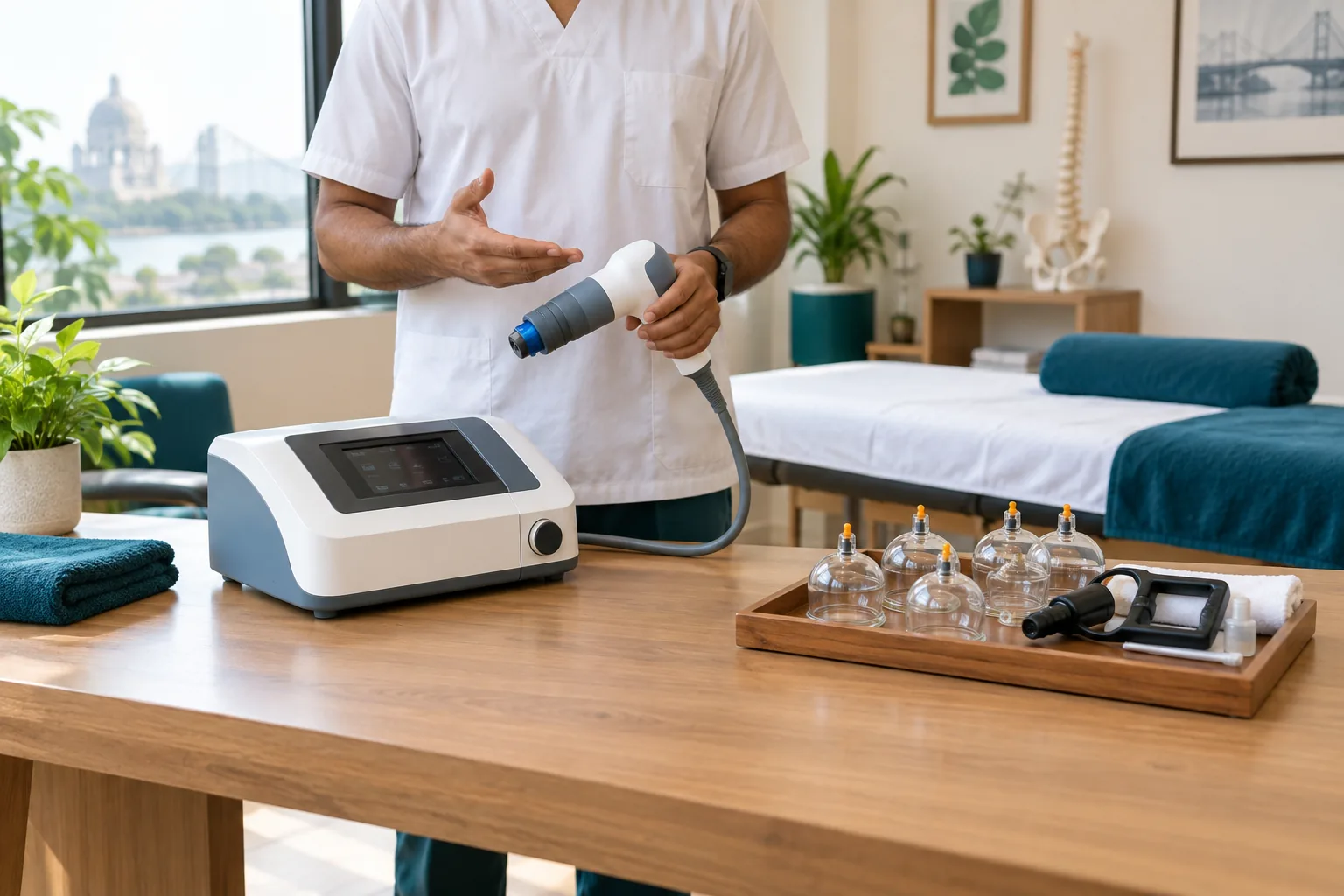
Shockwave therapy uses a device that delivers mechanical pulses; cupping uses suction. They are not interchangeable.
Before booking, ask what problem is being assessed, who will provide the method, what evidence applies to that goal, what temporary effects may occur and what alternatives are available.
Neither a device name nor a cupping mark diagnoses a condition. Severe, new or changing symptoms need appropriate medical assessment.
Shockwave therapy and cupping may appear beside each other on a service menu, but they do not describe the same physical method. A shockwave appointment involves a powered device that delivers mechanical pulses through an applicator. Cupping creates suction at the skin with a cup. That difference matters because the equipment, controls, expected sensations, temporary effects and safety questions are not interchangeable. The useful question is therefore not “Which one is best?” in the abstract. It is “What is the specific concern, what method is being proposed, who will provide it, and what realistic boundaries apply to that exact plan?”
Neither label identifies the cause of pain. A device can be genuine and still be unsuitable for a particular concern; a familiar traditional method can be offered respectfully and still have uncertain benefit. The US National Center for Complementary and Integrative Health describes the evidence for cupping as mostly low quality, with only limited support for pain reduction and insufficient high-quality evidence for other conditions. The FDA’s device resources also make an important practical point: devices have specific classifications, instructions, safety information and reporting routes. A clinic should be able to move from a broad label to the exact equipment and proposed use before asking you to consent.
People often compare methods by what they feel during a session: tapping, pressure, pulling or warmth. Sensation is only one part of the decision. First ask what the appointment is intended to do. Is the goal a short trial for comfort, support alongside rehabilitation, or something else that can be described without promising a cure? If the answer is a vague claim that the method will repair tissue, remove toxins or solve every kind of pain, pause. A useful goal should be modest, observable and linked to a review point, such as whether a daily activity feels different for a limited period without changing prescribed care.
Also ask who established the working diagnosis. If no qualified clinician has assessed a new injury or changing symptom, neither cupping marks nor a device response can supply that diagnosis. Pain may have many causes, and a temporary change after a session does not prove which structure was involved. Where an examination, imaging, medicine, rehabilitation plan or urgent action may be needed, the wellness enquiry should wait. This keeps the comparison honest: it prevents a choice between two services from replacing the more important choice between wellness care and appropriate medical assessment.
Ask for the exact device name or model, the applicator that would be used and the area being considered. The operator should be able to explain the manufacturer’s intended use, how the device is maintained, which settings are adjustable and how a setting is chosen for an individual session. You do not need to understand technical numbers before enquiring, but you should receive an explanation in ordinary language. “We always use the same setting” is not a substitute for a screen, and “the machine decides” does not explain professional responsibility.
The FDA’s general medical-device information provides public routes for device classifications, approvals or clearances, recalls and adverse-event reporting. That does not mean every wellness device is FDA reviewed or that a listing proves effectiveness for your concern. It means the exact product identity matters. If the clinic cannot identify what it uses, you cannot meaningfully compare its instructions, limits or maintenance expectations.
For cupping, name the variant rather than accepting one general word. Dry cupping uses suction without intentionally piercing the skin. Wet cupping includes skin piercing and blood entering the cup. Ask which is proposed, what cup material and suction method are planned, how pressure and time are controlled, and whether the cups are single-use or processed between people. NCCIH notes that contaminated equipment can transmit bloodborne disease if it is reused without appropriate sterilisation, including when blood contamination is unintended.
Ask how marks, skin tenderness and other temporary effects will be explained. NCCIH lists possible adverse effects including persistent discoloration, scars, burns and infection, and says cupping may worsen eczema or psoriasis. That does not predict what will happen to one person, but it makes a skin check and a clear aftercare plan relevant. Tell the practitioner about active rash, broken skin, unusual bruising, poor healing, medicines that affect bleeding, and any previous reaction to adhesives, oils or cleaning products. Do not stop prescribed medicine because a session is being considered.
Describe when the concern began, whether it followed an injury or procedure, what makes it better or worse, and whether it is stable or changing. Share relevant diagnoses, rehabilitation restrictions, medicines, skin conditions and changes in sensation. If you have already been given an exercise or recovery plan, bring its practical restrictions rather than asking the wellness provider to replace them. A good screen should also ask about the exact body area and whether there is swelling, infection, an open wound or a reason the area should not be treated.
The booking conversation should end with a plan, not just an appointment time. Confirm the proposed method, who will provide it, the expected duration, clothing or access needs, likely temporary effects, aftercare and what would cause cancellation or referral. If availability has not been confirmed for that device or operator, treat the enquiry as provisional. Do not travel because a generic service page exists.
Before contact begins, the provider should identify the area, repeat the main safety points and agree a stop signal. With shockwave, ask for a gradual, controllable introduction to the chosen setting and report unexpected sharp pain, burning, numbness or a sensation that does not match the explanation. With cupping, ask how suction will be released quickly and speak up about pinching, burning, dizziness or increasing discomfort. You may pause to ask a question, request an adjustment or decline the remaining procedure. Consent to start is not consent to continue regardless of how you feel.
A practitioner should not use visible marks, pain intensity or tolerance as a competition or proof that the treatment is “working.” Stronger is not automatically better. The meaningful record is what method and settings were used, what you felt, whether any adverse response occurred, and what follow-up was agreed.
Do not turn a severe, new or rapidly changing problem into a choice between shockwave and cupping. Significant trauma, major swelling, fever or signs of infection, new weakness or numbness, loss of function, unexplained night symptoms, or a recent operation with unresolved restrictions deserve appropriate clinical advice. Urgency depends on the symptom and local services. If you feel acutely unwell or have a potentially life-threatening symptom, use emergency care rather than waiting for a wellness appointment.
The same boundary applies after a session. Seek appropriate advice for severe or worsening pain, extensive swelling, a burn, spreading redness, pus, persistent bleeding, fever or a new neurological symptom. Contacting the clinic can help document what occurred, but it must not delay medical care when the problem is serious.
Ask for method-specific instructions before you leave. For a device session, this may include what skin response to watch, when usual activity can resume and whom to contact about an unexpected reaction. For dry cupping, clarify how to care for tender or marked skin and avoid friction that feels uncomfortable. For wet cupping, obtain written wound-care instructions, dressing guidance and warning signs. Do not apply an unapproved product to irritated or broken skin simply because it is described as natural.
Review one or two practical outcomes at an agreed time. Examples include sleep disrupted by the concern, ease of a routine movement, or whether a planned rehabilitation activity was tolerated. Record adverse effects as carefully as desired effects. A short-lived comfort change can be personally useful, but it does not demonstrate tissue healing, remove the need for diagnosis or justify abandoning a proven plan. If there is no meaningful benefit, or the burden of marks, tenderness, cost or travel is greater than the value, it is reasonable not to continue.
This sequence will not choose a method for you. It gives the clinic enough information to answer responsibly and gives you a clear basis for declining, postponing or asking for appropriate assessment.
Key takeaways
Shockwave uses mechanical pulses; cupping uses negative pressure at the skin.
Device settings, tissue area, skin, recent injury and medical context should be explained for the proposed method.
Choose only after scope, evidence limits, expected effects, alternatives and aftercare are clear.
Neither a device name nor a cupping mark diagnoses a condition. Severe, new or changing symptoms need appropriate medical assessment.
This editorial guide is general education. It does not diagnose a condition, confirm suitability or promise a clinical result.
Practical checklist
Appointment enquiry
Use the service pages to prepare a specific enquiry, then let the practitioner confirm scope and suitability.

Continue learning
Compare the exact method, read the safety framework and return to the Insights hub before you enquire.
Frequently asked
There is no universal winner. The relevant evidence depends on the condition, protocol and comparator.
No. Diagnosis requires appropriate assessment.
Ask for the exact method, operator, screening, evidence limits, alternatives and aftercare.