Trace every item through the process
Judge hygiene as a complete pathway, not a sealed packet
Wet cupping intentionally breaks the skin, so safe preparation involves more than seeing one unopened item. Before consent, ask the practitioner to separate three groups: the item that pierces or cuts skin, supplies intended for one person only, and equipment designed to be reused. Then ask how each group moves from clean storage to preparation, use and disposal or reprocessing. You do not need technical vocabulary to ask these questions. Plain questions such as “What touches broken skin?”, “Is this opened for me?” and “Where does it go afterward?” can reveal whether the process is understandable. If the explanation is vague, pausing is a reasonable safety decision.
Begin before the tray is prepared
Screening should happen before an invasive setup is opened. Share relevant bleeding, healing, allergy, skin, medicine and recent-procedure information through the clinic’s appropriate route. Do not stop prescribed medicine because you think wet cupping requires it; medicine changes belong with the prescriber. Ask which body area is proposed and whether the skin there is healthy enough to assess. A tidy room is reassuring but does not answer how hands, surfaces and equipment are handled. Notice whether clean items are stored away from used equipment and whether there is enough uncluttered space to prepare the session without mixing personal objects, phones or paperwork into the work area.
Understand what “sterile and single-use” should mean
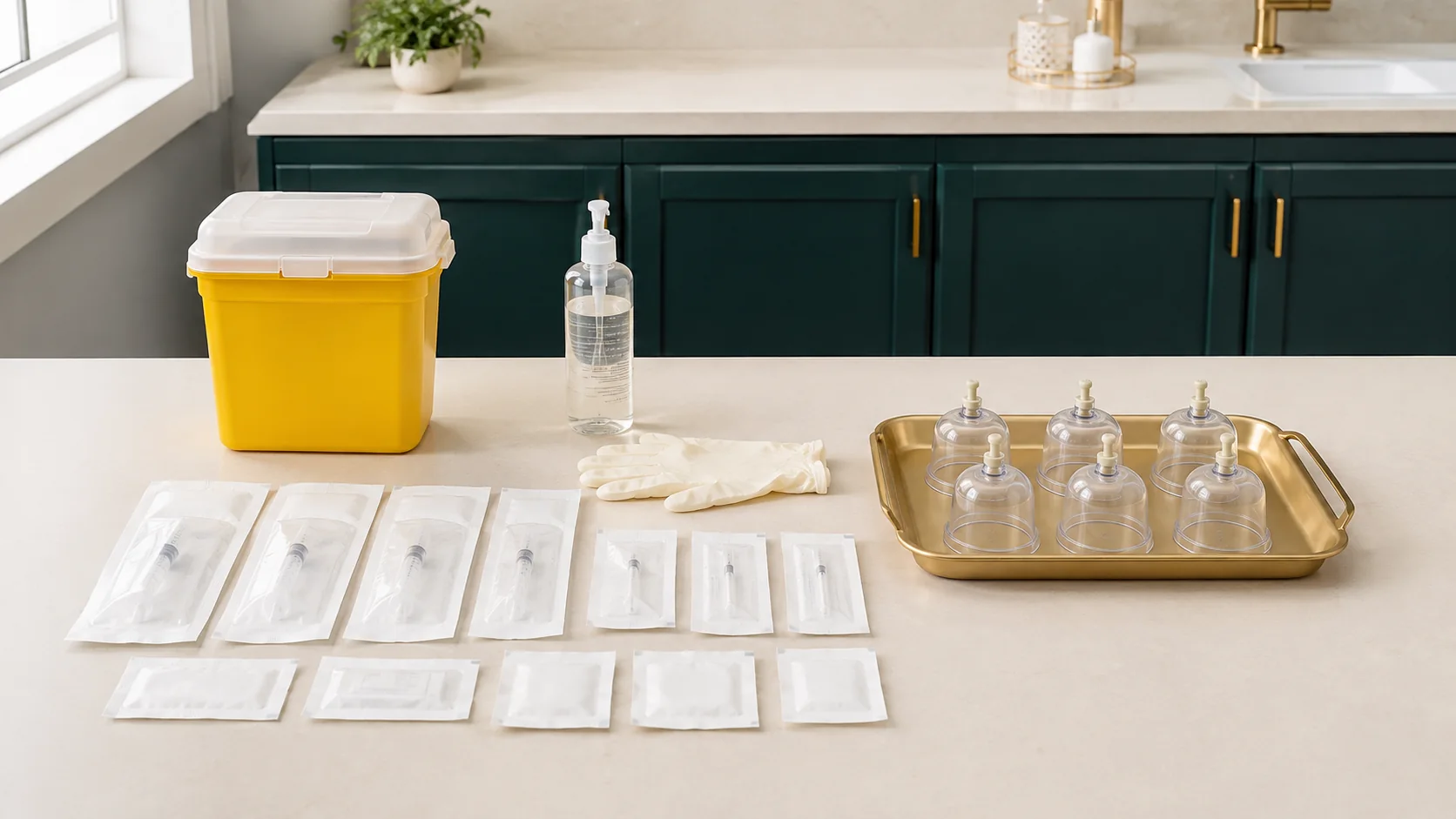
For an item intended to pierce or cut skin, the key questions are whether it is supplied sterile, whether its packaging is intact, whether it is opened for one person and whether it is discarded immediately into the appropriate sharps container. “Disposable” and “sterile” are not interchangeable words, and wiping an invasive item does not turn it into a new sterile item. Ask when the packet will be opened and what happens if packaging is damaged or already open. You may request an explanation before the item is handled. The goal is not a performance for the visitor; it is a process that remains safe whether or not anyone is watching closely.
Ask separately about cups and reusable equipment
Cup designs and clinic processes vary, so avoid assuming that every cup is either disposable or reusable. Ask whether a cup can contact blood, whether it is used for one person and what reprocessing applies if it is designed for reuse. The same question extends to pumps, connecting parts, trays, protective surfaces and any tool that may be contaminated during the method. A practitioner should be able to explain how clean and used equipment are kept apart. A quick wipe in front of you does not, by itself, describe a validated cleaning, disinfection or sterilisation process. If the answer depends on the exact cup or part, ask the practitioner to identify that item specifically.
Watch the transition from clean to used
Hand hygiene and gloves have different roles. Gloves do not replace clean hands, and the same pair should not move freely between a phone, door handle, clean pack and procedure area. You do not need to police every movement, but you can ask for a pause if a clean item appears to have been contaminated. Used sharps should not be left on the tray, recapped casually or carried through the room without a disposal plan. Blood-contaminated waste should be separated from ordinary clean supplies. If another surface or device is touched during the procedure, the practitioner should manage that transition without turning the clean setup into a mixed workspace.
Consent includes the invasive step and the alternative
Understanding dry cupping does not automatically mean you have consented to wet cupping. Ask when the skin break occurs, how many sites are proposed, what bleeding may occur and what non-invasive or postponed option exists. Agree on a stop signal before the step begins. You can decline if the process differs from what was explained or if a safeguard cannot be clarified. Do not accept pain, excessive bleeding or a contaminated item as something you must tolerate because the appointment has started. If you feel faint or unwell, say so immediately. A calm, staged explanation should make it possible to stop without rushing through the remaining steps.
Leave with a wound-care plan you can follow
Before dressing, ask what has been placed on the area and mention adhesive or product allergies. Know how long the dressing should remain, how to keep the site clean, what clothing or water exposure advice applies and when normal activity can resume. Ask what degree of spotting, tenderness or irritation is expected for this method and which changes require prompt medical attention. Written aftercare is useful because details can be forgotten after the visit. Make sure the contact route is clear, but remember that persistent bleeding, spreading redness, drainage, fever, worsening pain or feeling unwell may need medical care rather than waiting for a routine business reply.
Plan for the journey and home environment
For a Kolkata appointment, confirm the location and allow enough time that the method and wound-care explanation are not rushed near closing. Wear clothing that can protect the dressing without pressing or rubbing it. Consider heat, rain, a crowded commute and the possibility that a bag strap or seat back may contact the area. At home, keep pets, shared towels, cosmetics and unverified home remedies away from broken skin. Prepare only the simple supplies recommended in the aftercare instructions. If you cannot keep the area protected during an immediate swim, sport, long journey or work task, discuss timing before the procedure rather than improvising afterward.
Do not let these shortcuts pass as proof
- A clean-looking room does not prove safe handling of invasive items or blood-contaminated waste.
- New gloves do not correct an item that was already opened, reused or contaminated.
- A sealed packet does not explain the handling of cups, surfaces, pumps and sharps.
- “Herbal,” “natural” or “traditional” does not replace infection-control and wound-care questions.
- A photograph of supplies cannot verify what happens during every appointment.
A short checklist at the point of care
Before the first skin break, you should be able to identify the invasive item, see that its pack is intact, know that it is for one person and understand where it will be discarded. You should know whether cups are disposable or reusable, how blood contact changes their handling and how clean and used items stay separate. You should have received an explanation of the body area, likely skin response, bleeding boundary, dressing and aftercare. Finally, you should know how to pause and which symptoms need urgent or medical help. If any answer remains uncertain, postpone the invasive step and seek clarification; consent is not a deadline.