
Name the current
Ask whether stimulation is delivered through electrodes, cups or another arrangement.
Device comparison guide
Similar-sounding electrical labels can describe different procedures. Ask for the exact device and setup before you consent.
Quick answer
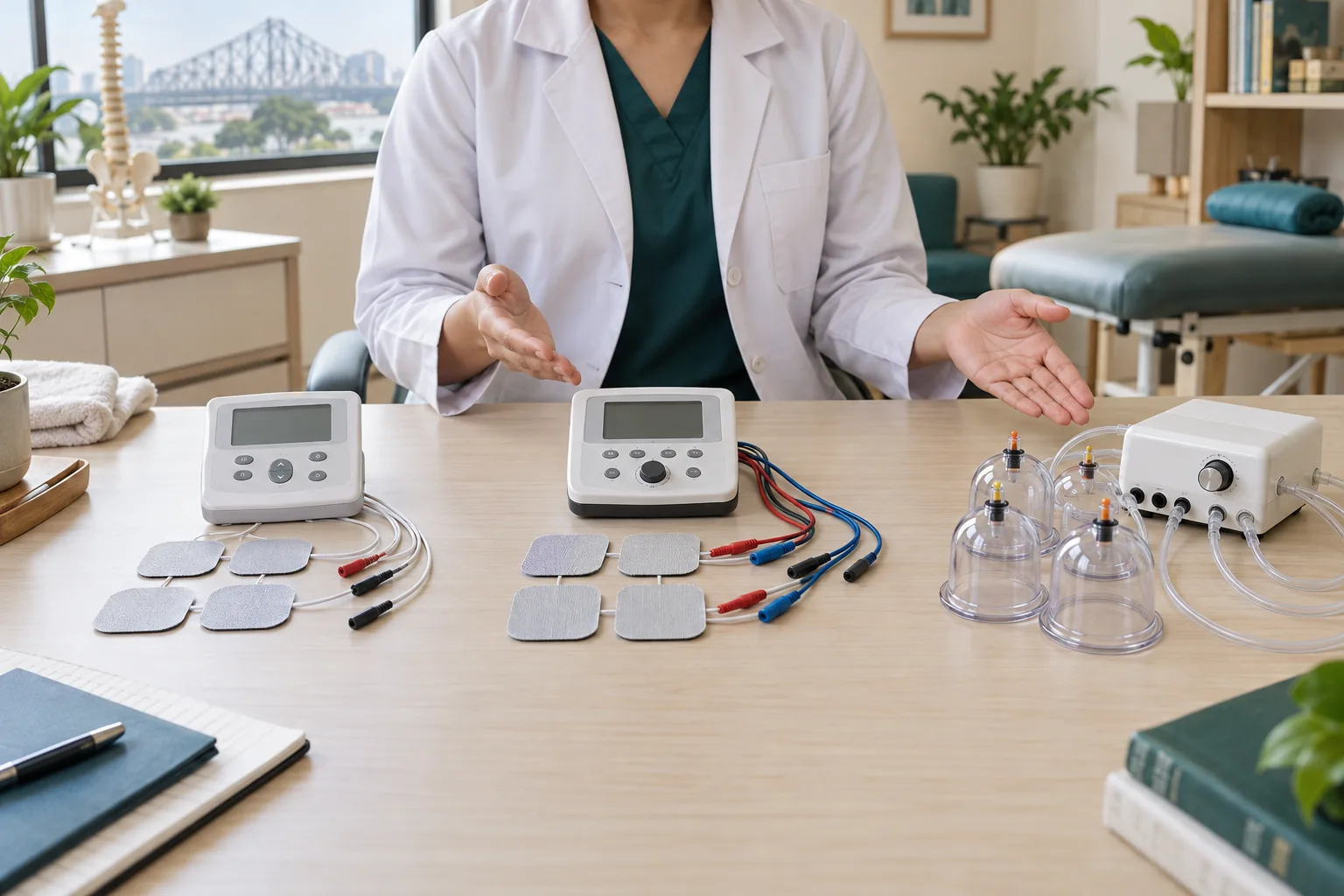
TENS, IFT and electro-cupping may use different equipment, electrodes, suction or combinations of methods.
Ask who operates the equipment, where contact is made, how intensity is controlled, what implants or skin concerns matter and what the stop signal is. Do not infer equivalence from a menu label.
Device-based wellness care cannot replace diagnosis, prescribed treatment or urgent assessment.
TENS, IFT and electro-cupping all contain language associated with electrical stimulation, but that similarity does not make them equivalent. TENS usually means transcutaneous electrical nerve stimulation delivered through adhesive pads on the skin. The NHS describes a TENS unit as a small battery-powered device connected by wires to sticky pads, with controls that produce a tingling sensation that should not be painful. IFT is another electrical-stimulation label, but equipment and electrode arrangements vary. Electro-cupping may refer to a system that combines suction with powered controls or electrical contact. The clinic must define its own equipment rather than expecting you to infer the procedure from a menu heading.
Begin with one neutral request: “Please show me the exact device and explain every point of contact with my body.” From there, identify whether current passes only through surface electrodes, whether cups add suction, whether more than one device is involved and who controls each setting. This prevents a familiar description of TENS from being borrowed to explain an IFT or electro-cupping setup that has different instructions.
| Question | TENS enquiry | IFT enquiry | Electro-cupping enquiry |
|---|---|---|---|
| Skin contact | Number and location of adhesive pads | Electrode number and arrangement | Cup, electrode or combined contact points |
| Main control | Current level and pad placement | Exact programme, intensity and layout | Electrical setting plus suction control |
| Likely local issue | Pad sensitivity or irritation | Electrode comfort and sensation | Skin response to both contact and suction |
| Essential explanation | How to turn it off immediately | How this device differs from TENS | How electrical and suction parts are separated and stopped |
The table is a conversation aid, not a universal technical specification. If a provider’s setup differs, ask them to describe it and show the relevant manufacturer instructions. A product name, certification mark or digital display does not prove suitability or a health outcome. FDA device resources distinguish products by intended use and provide routes for safety notices and problem reporting; meaningful consent therefore depends on the identifiable device, not merely the presence of a machine.
The NHS says TENS may give temporary pain relief for some types of short- or long-term pain, but it does not work for everyone. It also advises speaking with a healthcare professional when the cause of pain is uncertain and checking that TENS is safe before use. These are useful boundaries: temporary relief is different from diagnosing or correcting a cause, and a familiar consumer device still needs responsible use.
NHS instructions say the unit should be off before setup, pads should be placed on clean skin near the painful area with space between them, and intensity should be increased slowly until there is tingling rather than pain. It advises stopping if skin becomes itchy, irritated or red. It also lists locations and situations in which TENS should not be used, including irritated, broken, infected or numb skin; the neck, mouth or eyes; across the chest and back at the same time; while asleep; in a bath or shower; or while driving or operating tools. Those points apply to TENS guidance. They should not be silently copied as a full protocol for a different IFT or electro-cupping device.
Tell the clinic about any implanted electronic or cardiac device, epilepsy, pregnancy, altered sensation, numbness, skin condition, open wound, recent procedure and medicine relevant to the enquiry. The NHS specifically says not to use TENS with a pacemaker or epilepsy, or during pregnancy unless a doctor or midwife advises it. For IFT or electro-cupping, do not assume the same list is either complete or automatically transferable. Ask the operator to check the exact device instructions and direct you to appropriate clinical advice when an implant or medical condition is relevant.
Screen the symptom as well as the equipment. Electrical stimulation should not be used to avoid assessment of a new injury, severe or worsening pain, unexplained weakness, loss of sensation, significant swelling, fever or another concerning change. If the skin is numb, you may not reliably notice excessive stimulation or heat. If the cause is unclear, the next useful action may be an assessment rather than trying three devices to see which feels strongest.
An answer should be understandable without technical theatre. Ask for a demonstration on the powered-off device before anything touches the skin. For electro-cupping, request separate explanations for suction and electricity. You should know whether changing one setting changes the other, how pressure is released, and whether the system can be stopped immediately without pulling on the skin.
Establish a baseline while the device is off: how the skin looks, whether the area is tender, and whether sensation is normal. The operator should introduce stimulation gradually and check what you feel in clear terms. With TENS, NHS guidance describes a tingling sensation that should not be painful. For another device, ask the operator to describe its expected sensation without promising that discomfort proves effectiveness.
Stop for burning, sharp pain, rapidly increasing discomfort, dizziness, breathlessness, palpitations, unexpected muscle contraction, loss of contact, or any sensation outside the agreed range. With suction, also stop for painful pinching, excessive pulling or a skin change that concerns you. Do not wait for the end of a timer. You can withdraw consent, and the operator should know how to power down and remove contacts safely.
After surface electrodes are removed, look at the contact areas in good light. Ask what mild, short-lived response may occur and what persistent redness, itching, blistering, pain or other change should trigger advice. If adhesive sensitivity is possible, discuss alternatives before application rather than testing several pads during the session. Keep the device and pads out of water and follow the exact manufacturer’s care instructions if you are using a personal TENS unit.
If cups were also used, ask separately about suction marks, tenderness, products placed on the skin and friction from clothing or exercise. NCCIH notes that cupping can cause temporary marks and may cause persistent discoloration, scars, burns or infection. An electrical programme does not cancel those suction-related effects. If skin was intentionally pierced, the appointment is no longer comparable to ordinary surface-electrode use and needs invasive-item, sharps and wound-care controls.
A change during stimulation may fade when the unit is turned off. That can still matter to the person, but it does not identify the source of pain or show that tissue has healed. Decide before the session what will be reviewed: perhaps comfort during a specific task, sleep disruption, or ability to follow an existing activity plan. Record the method, area, settings, duration and any skin response. Avoid changing several therapies at once if you want to understand what happened.
Do not accept “more current means more benefit,” darker marks as proof of detoxification, or a dramatic immediate sensation as evidence of lasting improvement. If the provider cannot state the uncertainty, alternatives and stopping rule, there is not enough information for an informed choice.
This produces a usable booking answer: either the clinic can identify and explain the method, it recommends that you seek appropriate advice first, or you decide not to proceed. All three outcomes are more responsible than choosing a device by its acronym.
Key takeaways
Ask whether stimulation is delivered through electrodes, cups or another arrangement.
Implants, skin condition, altered sensation, medicines and recent procedures may change the conversation.
You should understand settings, sensations, pause controls and aftercare before starting.
Device-based wellness care cannot replace diagnosis, prescribed treatment or urgent assessment.
This editorial guide is general education. It does not diagnose a condition, confirm suitability or promise a clinical result.
Practical checklist
Appointment enquiry
Name the device label you saw and ask for the exact method, screening and current availability.

Continue learning
Compare the exact method, read the safety framework and return to the Insights hub before you enquire.
Frequently asked
No. Ask the provider to explain the exact equipment and electrical setup.
No. Suction and electrical controls still require screening and informed consent.
A clear stop signal and accessible controls should be agreed before starting.