
Define the service
Clarify therapeutic device versus diagnostic scan.
Device safety guide
Before booking, confirm whether the enquiry is for therapeutic ultrasound or diagnostic imaging and who will provide it.
Quick answer
A therapeutic applicator and a diagnostic scan have different purposes, equipment and professional boundaries.
Ask about the intended purpose, area, settings, contact medium, operator scope and reasons to pause. A device session cannot diagnose a new injury or explain a worrying symptom.
Do not delay appropriate assessment because a menu lists ultrasound.
Ultrasound is a broad technology word, not a complete appointment description. Diagnostic ultrasound creates images that a healthcare professional uses to investigate, monitor or guide medical care. A service marketed as therapeutic ultrasound uses a device for a different purpose and does not produce a diagnostic answer. The first booking question should therefore be direct: “Is this a diagnostic scan or a therapeutic device session?” If the answer is therapeutic, ask the provider not to describe it as a scan or suggest that it can identify a tear, inflammation or another cause of symptoms.
The NHS describes a diagnostic scan as a procedure used to view structures inside the body, often in a hospital or clinic, after referral for reasons such as investigating pain or a lump. The FDA similarly explains that ultrasound imaging uses high-frequency sound waves, a transducer and a contact gel to produce real-time images. Those official descriptions help define the boundary. A wellness session that moves an applicator over skin is not automatically diagnostic simply because it also uses sound energy, gel or the word ultrasound.
Both diagnostic and therapeutic contexts may mention a probe or applicator, contact medium and settings. The shared vocabulary can be confusing. For diagnostic imaging, a healthcare professional interprets images in the context of a medical question. For a therapeutic session, ask what the device is intended to deliver, who operates it and what limited goal is being discussed. If you need an explanation for a new lump, severe swelling, an acute injury or persistent unexplained pain, seek an appropriate assessment rather than asking a therapy operator to infer the cause from the way the area feels.
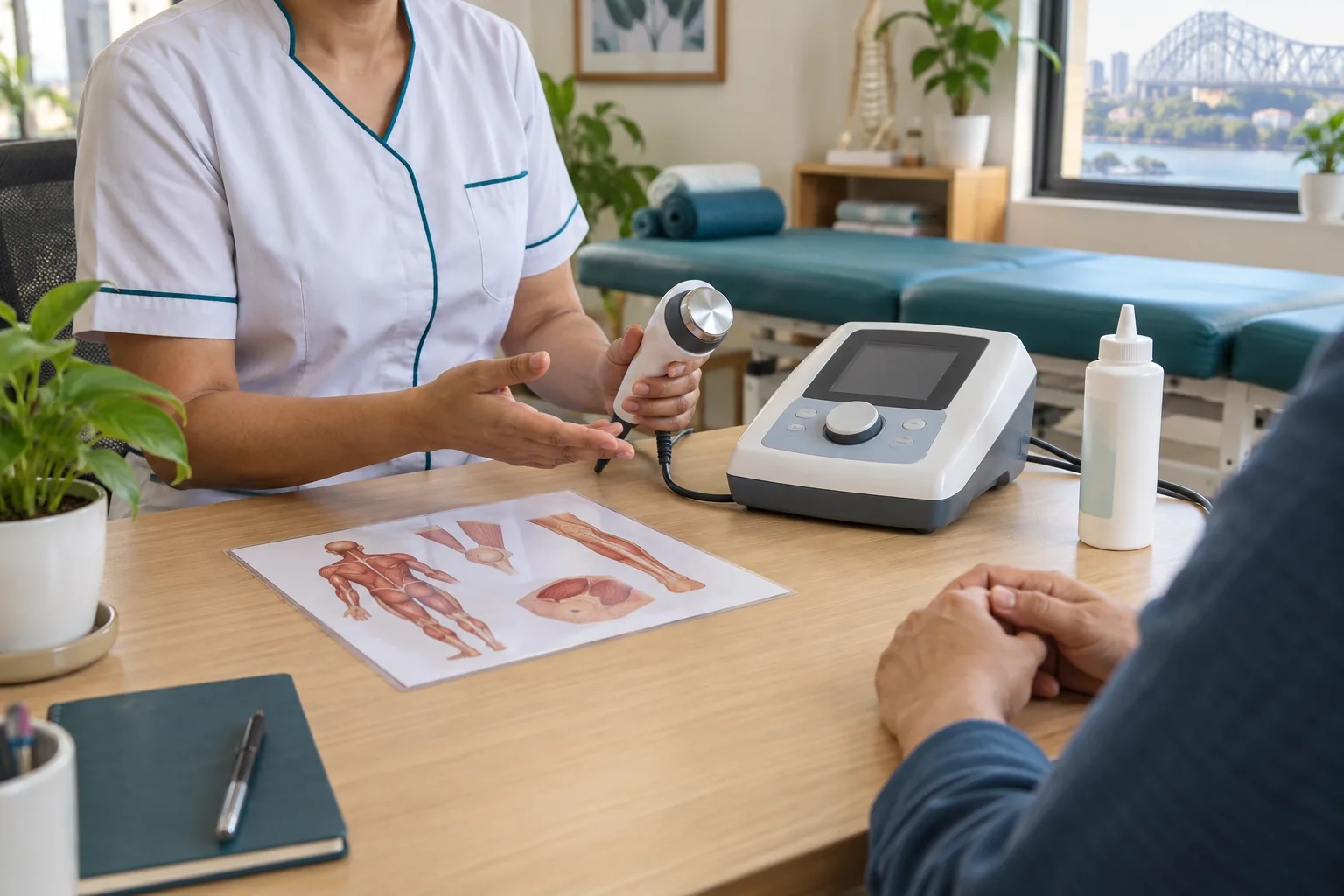
Do not accept a screenshot, waveform or numerical display as a diagnosis unless it is part of a proper diagnostic service and interpreted by an appropriate professional. A therapeutic console may display time, output or programme information without displaying anatomy. Ask the provider to point out exactly what the screen represents. This simple step reduces the risk of mistaking device feedback for clinical imaging.
A useful explanation should name the device, applicator, body area, contact medium, settings process, session length and intended purpose. Ask whether the applicator moves continuously or is used in another manufacturer-directed way, how full contact is maintained, and how the operator checks skin sensation and comfort. The answer should refer to the exact model’s instructions rather than a generic claim about ultrasound.
If these questions cannot be answered before treatment begins, postpone the session. A polished machine and a familiar clinic setting do not replace informed consent.
The FDA notes that diagnostic ultrasound does not use ionising radiation, but also states that ultrasound energy can produce biological effects, including slight tissue heating and cavitation, and recommends prudent use by appropriately trained healthcare providers. That information should not be converted into a claim that every therapeutic application is dangerous or safe. It supports a more careful question: how does the operator keep exposure within the device’s intended instructions for this area and purpose?
Tell the provider about pregnancy, a recent operation or injection, an implanted device, altered sensation, infection, broken skin, a new swelling, and any diagnosis or restriction already given by a clinician. Ask whether the proposed area has a reason to avoid or modify the session under the manufacturer’s guidance. Do not rely on a universal internet list; equipment and contexts differ. When the provider is uncertain, the correct next step is to check the device instructions or refer you for appropriate advice, not improvise.
The area generally needs to be accessible for contact with the applicator. Before attending, ask what clothing would allow access while preserving privacy, whether draping is provided, and whether a companion or chaperone can be requested. NHS diagnostic-ultrasound guidance explains that people may move clothing, change behind a screen and request another person in the room. A therapeutic session is different, but the same visitor-centred questions about dignity and consent are reasonable.
Ask to see the unopened or clean contact medium before application if you have sensitive skin. Confirm that the selected area matches what was discussed; do not consent to a new area simply because time remains. You can decline photographs, demonstrations or additional modalities. Consent to one non-invasive applicator does not automatically include massage, cupping, electrical stimulation or any invasive procedure.
The operator should explain the expected contact pressure and any sensation before turning the device on. Depending on the exact equipment and settings, a visitor may notice pressure, movement of the applicator or warmth, but the clinic should not tell you to ignore burning, sharp pain or an unexpected change in sensation. Agree on a simple stop word or hand signal, especially if positioning makes conversation difficult.
Ask the operator to pause if the applicator remains still without explanation, contact becomes painful, the gel causes itching, or you feel dizziness or another unexpected symptom. The response should be to stop, inspect and reassess—not to insist that discomfort proves the device is reaching the problem. If a setting changes, you should be told what changed and why.
Therapeutic ultrasound should not become a holding place for a symptom that needs diagnosis. Seek appropriate medical assessment for severe or rapidly worsening pain, significant trauma, loss of function, a new or enlarging lump, major swelling, fever, spreading redness, an open or infected wound, new weakness or numbness, or a symptom that has not followed the expected recovery course. The level of urgency depends on the problem and local medical advice.
If you were referred for diagnostic imaging, keep that pathway. Do not replace a scan because a clinic offers therapeutic ultrasound. Conversely, a diagnostic scan result does not itself prescribe a wellness device session. Ask the clinician responsible for your care how any complementary method would fit the plan.
At the end, the contact medium should be removed gently and the skin checked. Ask whether ordinary washing, products, exercise or heat exposure need any adjustment for the exact area and device. There may be no special restriction, but that should be stated rather than guessed. Record the device, area, session length and any immediate skin response so that a later conversation is based on facts.
Seek advice for persistent or increasing pain, blistering, marked swelling, a spreading rash, signs of infection or any new concerning symptom. A clinic contact route can help report the device session, but it should not replace medical care. The FDA provides routes for reporting medical-device problems; ask the provider how it documents and escalates an unexpected event involving its equipment.
Diagnostic ultrasound’s established ability to create images does not prove that a therapeutic ultrasound protocol will improve a particular condition. They use related physical concepts for different purposes. Evidence for a therapeutic application must match the condition, device parameters, comparison and outcome being claimed. A general statement such as “ultrasound is widely used in medicine” is therefore not enough.
Ask what realistic change would be reviewed and over what period. Separate temporary comfort from function, recovery and diagnosis. Keep prescribed exercises, medicines and restrictions in place unless the responsible clinician changes them. If the provider promises tissue repair, guaranteed pain removal or a scan-like answer from a therapeutic session, request a credible source for that exact claim or decline.
This sequence gives the provider a chance to clarify scope before you travel. It also keeps a therapy enquiry from being mistaken for diagnostic imaging or medical clearance.
Key takeaways
Clarify therapeutic device versus diagnostic scan.
Find out which gel or medium is used and how sensitivities are handled.
No healing or pain result should be guaranteed without relevant evidence.
Do not delay appropriate assessment because a menu lists ultrasound.
This editorial guide is general education. It does not diagnose a condition, confirm suitability or promise a clinical result.
Practical checklist
Appointment enquiry
Use the service guide to prepare an exact ultrasound enquiry and confirm the operator and appointment scope.

Continue learning
Compare the exact method, read the safety framework and return to the Insights hub before you enquire.
Frequently asked
No. They are different services.
A wellness device cannot replace appropriate diagnostic assessment.
Ask which contact product is used and how skin sensitivity is screened.