Define the area
Scalp and head-area procedures should be described precisely.
Head-area safety guide
Define the area and procedure first. Do not treat Head Hijama as an automatic headache solution.
Quick answer
Head-area procedures can differ, and sudden or severe headache symptoms may need medical assessment first.
Ask whether the method is dry or wet, which area is proposed, how privacy and consent work and what symptoms would stop the appointment.
A wellness enquiry cannot diagnose a headache or neurological problem.
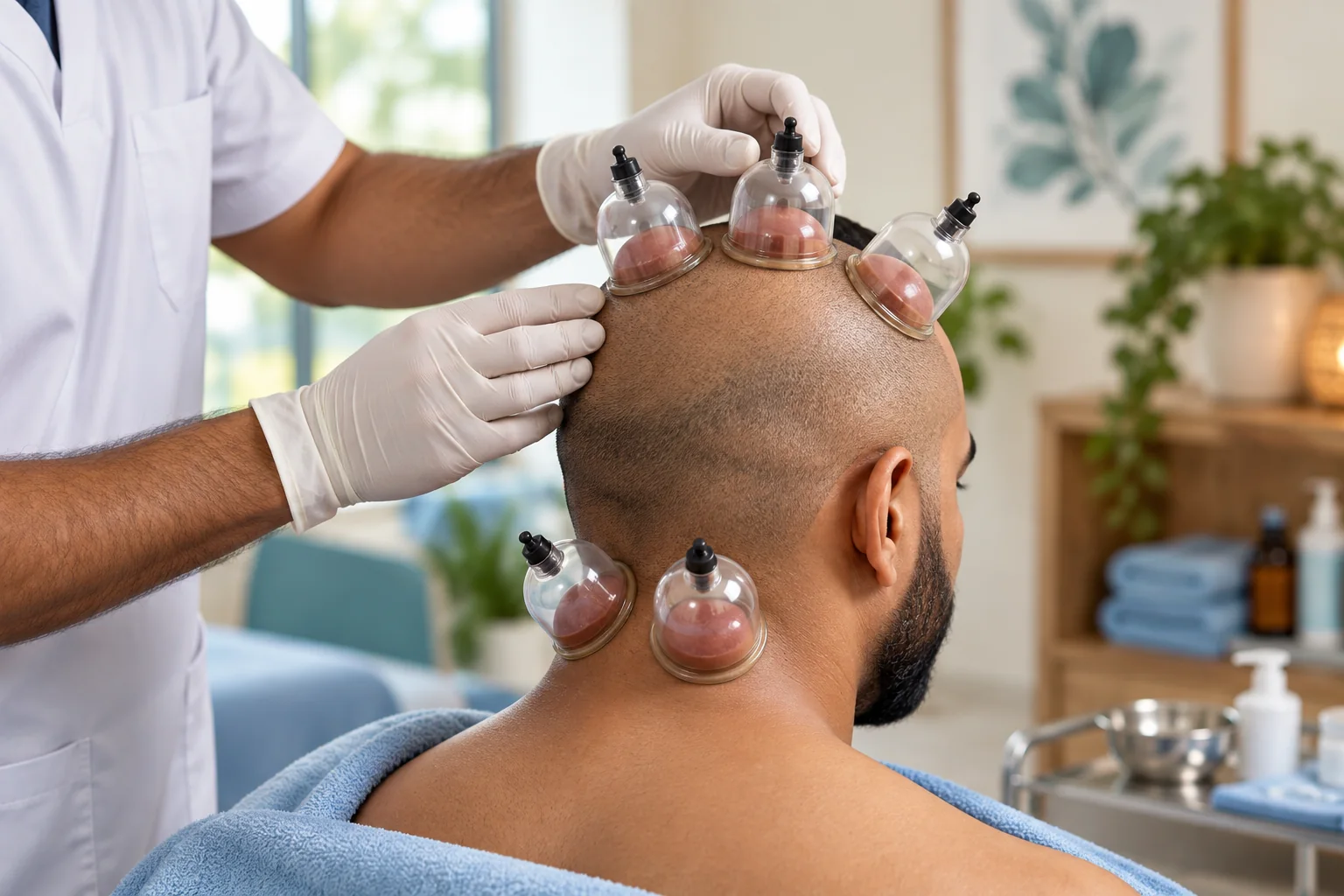
“Head Hijama” is not a diagnosis and does not describe one universal procedure. The proposed area might be on the scalp, near the hairline or elsewhere around the head and neck, while the technique might be dry suction or wet cupping that pierces the skin. Ask the provider to name the exact area and method in plain language. This determines whether hair access, skin preparation, sterile invasive items, bleeding control, a dressing or method-specific aftercare needs to be discussed. Repeat the agreed area back before the appointment begins to avoid ambiguity.
Also separate the procedure from the reason for asking. A headache, scalp concern, neck symptom and general wellness interest require different conversations. Cupping marks cannot identify the cause of a headache, and a temporary change after a session cannot confirm that a neurological or other medical condition has been treated. If the symptom needs examination or diagnosis, assessment comes before a wellness appointment.
The NHS advises emergency assessment for a headache that starts suddenly and is extremely painful, or a headache accompanied by seizure, weakness or numbness, difficulty speaking, walking, balancing or remembering, drowsiness, confusion or loss of vision. A severe headache after a recent head injury, or one with a very high temperature, stiff neck or sensitivity to bright light, also requires urgent attention. Do not wait for a Hijama booking or ask a wellness provider to rule these problems out through messaging.
Other headache patterns may still need timely clinical advice rather than an immediate appointment. Examples in NHS guidance include headaches that keep returning, worsen despite self-care, occur with vomiting or eye and vision problems, or are triggered or made worse by coughing, sneezing, bending or exercise. A brief symptom description can help the clinic redirect you, but it cannot replace a medical history and examination.
If there is no urgent warning sign, note when the symptom began, where it is felt, how often it occurs, how long it lasts and what seems to trigger or accompany it. Include recent injury, illness, changes in vision, jaw or scalp tenderness, neck symptoms and any assessment already completed. A headache diary can be more useful than a dramatic description because it shows timing and patterns. Keep the record for the relevant clinician and share only what the wellness provider needs for safe screening.
Provide an accurate list of medicines and supplements, especially when bleeding, bruising, alertness or healing may be affected. Mention allergies, skin conditions, previous scalp procedures, poor wound healing and any history of fainting during procedures. Do not stop pain medicine or another prescribed treatment to make the symptom easier to “read” during a session.
Ask whether hair needs to be moved, clipped or altered, and do not assume shaving is required or consented to. Confirm what skin preparation is proposed and whether any oil, adhesive or antiseptic may contact the scalp. Tell the provider about braids, extensions, coverings, sensitive skin, dermatitis, psoriasis, active spots, broken skin or recent chemical treatments that could affect access or irritation.
Discuss who will be in the room, the provider's gender if that matters to you, the amount of exposure required and whether a support person is permitted where appropriate. Agree that photographs will not be taken without separate, specific consent. A request to document an unexpected skin reaction is different from permission to use an image for promotion.
If the skin will be pierced, ask which sterile single-use item will be used, how it is opened and discarded, what protective equipment is worn and how blood-contaminated material is contained. The CDC's Standard Precautions emphasize hand hygiene, risk-based personal protective equipment, sharps safety and correct cleaning and disinfection of care equipment and the environment. Ask about each step rather than accepting “everything is hygienic” as a complete answer.
NCCIH warns that contaminated cupping equipment can spread bloodborne disease if shared without proper sterilisation. It also lists potential harms including infection, burns, scars and persistent discoloration, and notes rare reports of severe adverse events after scalp cupping. Rare does not mean expected, but it is a strong reason to reject casual claims that head-area cupping is automatically harmless.
Before contact, ask the provider to point out the agreed area and repeat whether the technique is dry or wet. Establish a stop signal that can be used without moving suddenly. Report unexpected sharp pain, burning, dizziness, nausea, visual change, new numbness, worsening headache or any sense that you may faint. The session should pause while the concern is assessed; discomfort should not be reframed as evidence that the method is working.
Pressure, duration and the number of sites should follow the plan you accepted. You may refuse an additional site, a stronger setting or a change from dry to wet cupping. A provider should not use the colour of a mark or the amount of blood as a diagnosis, toxin chart or reason to continue.
Ask when the area may be washed, what dressing is needed, how to keep it clean and dry, and when hair products, head coverings, helmets or tight clothing can be used without friction. If skin remains intact, clarify how to care for tenderness or marks. If the skin was pierced, follow the written wound-care instructions, wash hands before touching the dressing and avoid applying an unapproved cosmetic, oil or home remedy to the wound.
NHS guidance for minor cuts focuses on controlling bleeding, cleaning the wound and using a clean or sterile covering. Seek appropriate advice for persistent bleeding, spreading redness, increasing warmth or swelling, pus, worsening pain, fever or feeling unwell. New neurological symptoms or a severe headache after the session need medical assessment, not only a follow-up message to the provider.
After the appointment, keep two records. For the original headache or head symptom, note timing, severity, associated features, medicines used and whether normal activity was affected. For the procedure site, note tenderness, marks, bleeding, dressing condition and any unexpected skin change. Combining both into “better” or “worse” can hide an important warning sign. A quieter headache does not mean a wound problem can be ignored, and an ordinary temporary mark does not explain why a recurring headache began.
If headaches continue, become more frequent or change pattern, take the symptom record to an appropriate clinician. Do not keep repeating or intensifying a procedure to chase a short-lived response. Likewise, do not let a photograph of a mark become a remote diagnosis. Colour can change over time and may be interpreted differently under different lighting; the mark does not reveal a toxin, pressure inside the head or a neurological cause.
Ask who answers aftercare questions, during which hours and what information they will need. Keep the exact date, body area, dry or wet method and any product used. If the clinic is closed when a serious symptom appears, use the appropriate urgent or emergency service rather than waiting. A follow-up promise is useful only when it includes a clear boundary for problems the clinic cannot assess.
This pathway does not decide that Head Hijama is suitable. It prevents a broad service name from obscuring headache red flags, scalp safety, informed consent and the option to decline.
Key takeaways
Scalp and head-area procedures should be described precisely.
Sudden severe headache, weakness, confusion or vision change needs care.
Draping, consent and a stop signal should be explicit.
A wellness enquiry cannot diagnose a headache or neurological problem.
This editorial guide is general education. It does not diagnose a condition, confirm suitability or promise a clinical result.
Practical checklist
Appointment enquiry
Name the area and broad concern, then ask for the method, privacy, screening and availability confirmation.

Continue learning
Compare the exact method, read the safety framework and return to the Insights hub before you enquire.
Frequently asked
Not automatically; headache causes vary.
No assumption should be made; confirm the exact method.
Sudden severe headache, confusion, weakness, fainting, vision change or fever with neck stiffness needs appropriate assessment.