Share
Describe the broad reason for enquiring and disclose relevant symptoms privately.
Head Hijama enquiry
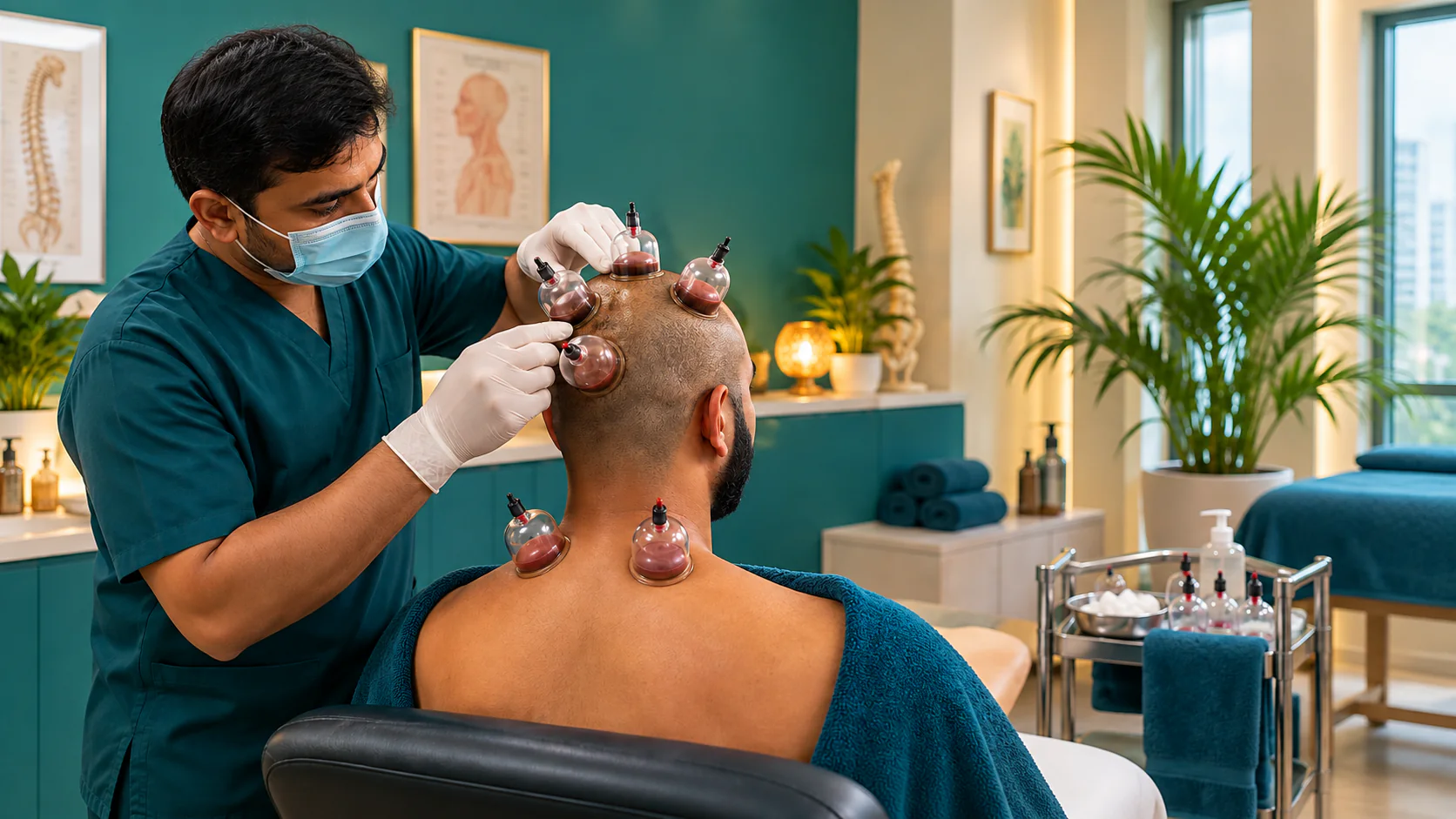
The phrase can describe different scalp or head-area procedures. It should not automatically be treated as a headache treatment.
What you should know
Head Hijama can refer to different dry or wet methods around the scalp or head area.
Confirm the exact area, whether the skin will be broken, the practitioner’s method-specific training, the screening process, privacy arrangements and the aftercare plan. A website cannot determine whether it is suitable for your symptoms.
This service is offered by Cupping Relief Wellness as an appointment enquiry. Personal suitability, the exact setup and the appointment time are confirmed after screening; no service page guarantees a health outcome.
A Personalised Consultation Before Your Visit
Your visit
The exact plan is chosen only after a personal conversation.
Describe the broad reason for enquiring and disclose relevant symptoms privately.
Confirm the area, method, screening boundary, privacy plan and when medical assessment comes first.
Proceed only after the practitioner confirms suitability, availability and follow-up instructions.
How it may feel
The sensation depends on the exact method and area. You should know whether skin is intact, what temporary effects may occur and how to stop the session.
Preparation
After the session
Evidence in plain language
Head Hijama should not be marketed as a guaranteed headache cure. Headache causes vary, and appropriate medical assessment must come first when symptoms are new, severe, changing or accompanied by warning signs.
Cupping is complementary care. It must not delay diagnosis, emergency help or treatment recommended by a qualified medical professional.
Appointment enquiry
If you are asking about Head Hijama, name the area and broad concern, then wait for method, screening, privacy, practitioner and availability confirmation before travelling.

Compare your options
Frequently asked
Not automatically. Headache causes vary, and red-flag symptoms need medical assessment.
Ask the provider to explain the exact method. If the skin is broken, sterile-item, sharps, bleeding and wound-care safeguards apply.
No. Screening is required, especially for skin concerns, bleeding risk, medicines, recent procedures or neurological symptoms.
The practitioner, method, safety checks and current availability must be confirmed first.