From enquiry to leaving the clinic
Build the visit around dignity, clarity and choice
A comfortable appointment begins before anyone discusses cups or body areas. Decide which parts of the visit matter most to you: a female practitioner, a private room, a companion, limited exposure, extra time for questions or a particular way of receiving aftercare. Put the essential request in the first enquiry, but keep private health details for the clinic’s screening process. A useful first message can be short: name the service you are considering, say that you would like a female practitioner, offer two suitable times and ask the clinic to confirm the practitioner, room arrangement and next screening step. Confirmation matters because an online service description does not guarantee who is available on a particular day.
Separate a preference from an appointment confirmation
“Female practitioner preferred” is not the same as “female practitioner confirmed.” Before travelling, check the date, time, Kolkata location, method and named or described practitioner role. If another team member may enter, assist or observe, ask when that could happen and whether you can decline. If language affects comfort, mention the language you would prefer for explanations. A relative or friend can sometimes help you feel at ease, but their presence does not replace your consent and they should not answer personal questions for you unless that is what you want. If the clinic cannot meet a condition that is essential to you, postponing is a valid decision.
Ask about access before choosing clothing
The proposed body area determines what clothing is practical. Ask before the visit which area might need to be reached and whether there is a less exposing alternative. Loose layers may make access easier, but no general clothing recommendation can predict the exact plan. At the appointment, the practitioner should explain the area again before you change or move clothing. Only the area needed for the agreed method should be uncovered, with draping used in a way you understand. You can ask to adjust the plan, cover an area, sit up, pause or stop. If the explanation changes from what was confirmed during booking, take time to decide rather than feeling committed because you have arrived.
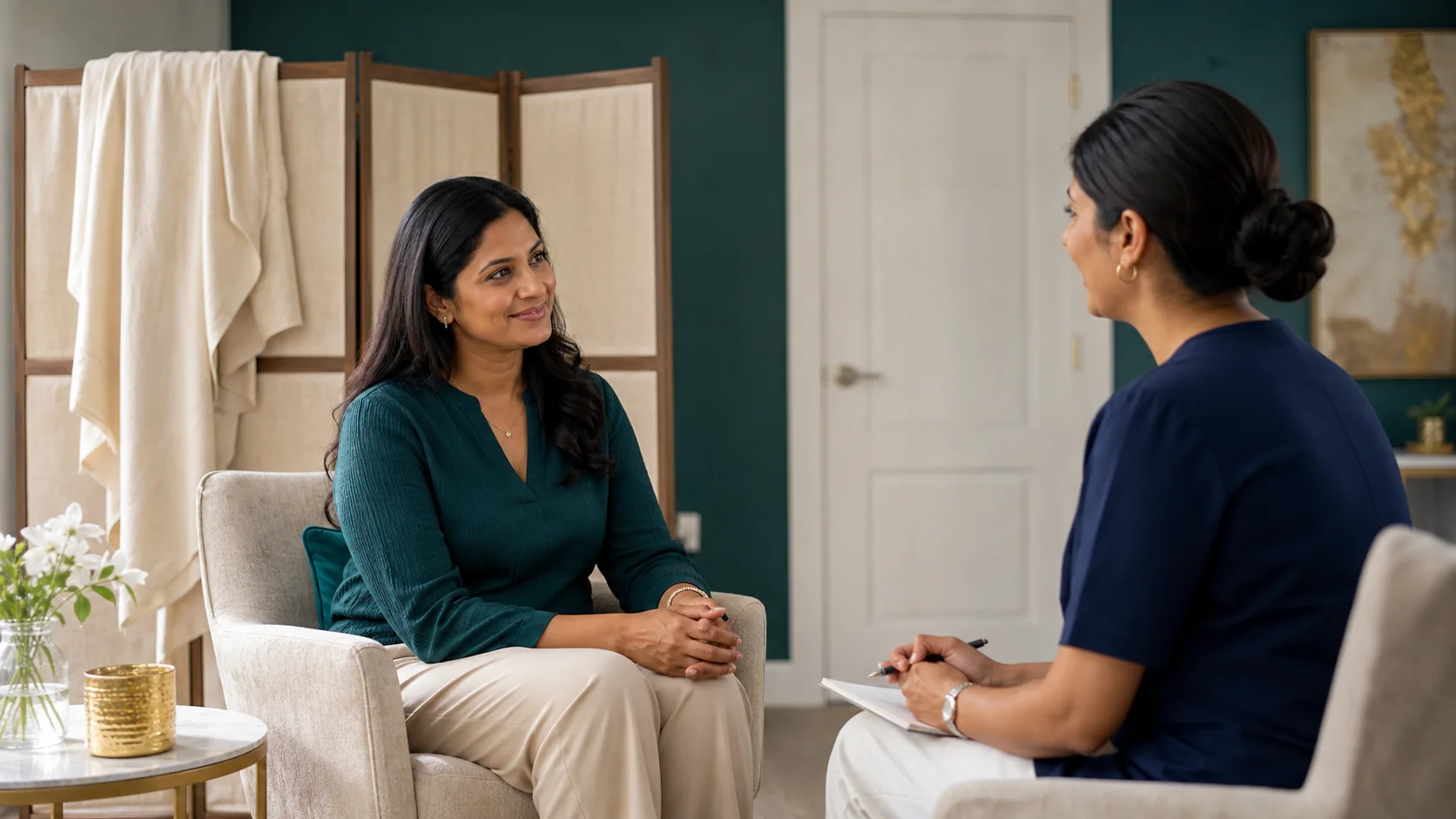
Make the consultation private enough for honest screening
Suitability questions may involve pregnancy, bleeding, medicines, allergies, skin changes, recent procedures or symptoms that deserve medical assessment. Those details are easier to discuss when you know who can hear, where records are kept and why each question is being asked. You do not have to send intimate photographs or a complete medical history through a casual messaging thread. Ask how the clinic collects information and whether a private conversation can happen at the visit. Give accurate answers to relevant questions, but ask for clarification when a question feels unrelated. Privacy should support safe screening; it should not be used to hide important risk information from the person responsible for the appointment.
Agree on consent one step at a time
Consent is more useful when it is specific. Confirm whether the plan is dry cupping, wet cupping or another method, which area is included, what contact or skin effect is expected and what alternatives exist. Wet cupping requires an additional explanation because skin is broken and wound care is needed. Before anything begins, agree on a plain stop signal and ask what the practitioner will do if you feel faint, unusually uncomfortable or simply change your mind. Consent to a consultation is not consent to every proposed technique. Consent to one body area is not permission for another. Paying, booking or lying on the treatment couch does not remove your right to ask for a pause.
Control photographs, messages and marketing separately
A clinical photograph, if genuinely needed for a record, and a marketing photograph are different decisions. Ask what will be photographed, whose device will be used, where the file will be stored, who can see it and how long it will be kept. Do not assume that a face being out of frame makes an intimate image harmless. You may decline photography or social-media use without turning that refusal into a debate about your treatment. If you choose to take your own aftercare photograph, keep it private and frame only what is necessary. Avoid sending it in a general chat unless the clinic has clearly asked for it through an appropriate route.
Plan the minutes after the appointment
Before leaving, make sure you can dress comfortably and privately, understand normal short-term skin changes and know whether a dressing, loose clothing or reduced friction is advised. Ask whom to contact for a routine concern and which changes should go directly to medical care. If you came with a companion, decide whether aftercare should be explained with them present. For a wet method, check how the area should be protected on the journey home and whether crowded travel, heat, rain or clothing could disturb the dressing. Arrange transport or extra time when you expect to feel tired; do not rely on the appointment to make an unexplained symptom safe.
Use a decision checklist, not social pressure
- I know who is expected to provide the service and whether my practitioner preference is confirmed.
- I understand the proposed method, body area, privacy arrangement and draping plan.
- I know how to ask for a pause, decline an area or stop without needing to justify myself.
- I have a private route for relevant screening information and have not been asked for unnecessary images.
- I understand method-specific aftercare, travel considerations and the boundary between clinic contact and medical help.
Common misunderstandings to clear up
A female-focused service does not automatically prove that a female practitioner is available, that every room is private or that every method is suitable during pregnancy or another health situation. A companion does not make an unsafe procedure safe. Modest clothing does not remove the need to explain body access. A consent form does not cancel ongoing verbal consent. Finally, a respectful visit does not require silence: useful care welcomes reasonable questions. If a clear request about privacy, people present or photography cannot be answered before the visit, that uncertainty belongs in the booking decision rather than being discovered after the appointment has started.
A practical Kolkata booking example
Imagine that you are travelling across Kolkata after work and need a female practitioner. Ask for an appointment within the stated clinic hours, confirm the exact location and allow enough time for screening rather than booking the last possible slot. Mention the practitioner preference and whether a companion may attend. Ask which clothing will make the agreed area accessible without unnecessary exposure. If wet cupping is being discussed, plan a comfortable journey home with the dressing protected and obtain written aftercare before leaving. This example is about logistics, not suitability: the final method still depends on screening and may be changed, postponed or declined.