
Instructions
Ask whether the practitioner follows the device manufacturer’s instructions, including placement, settings, cleaning and maintenance.
Device decision guide
A device name alone does not explain what it is for, who should use it or whether it is appropriate for your goal.
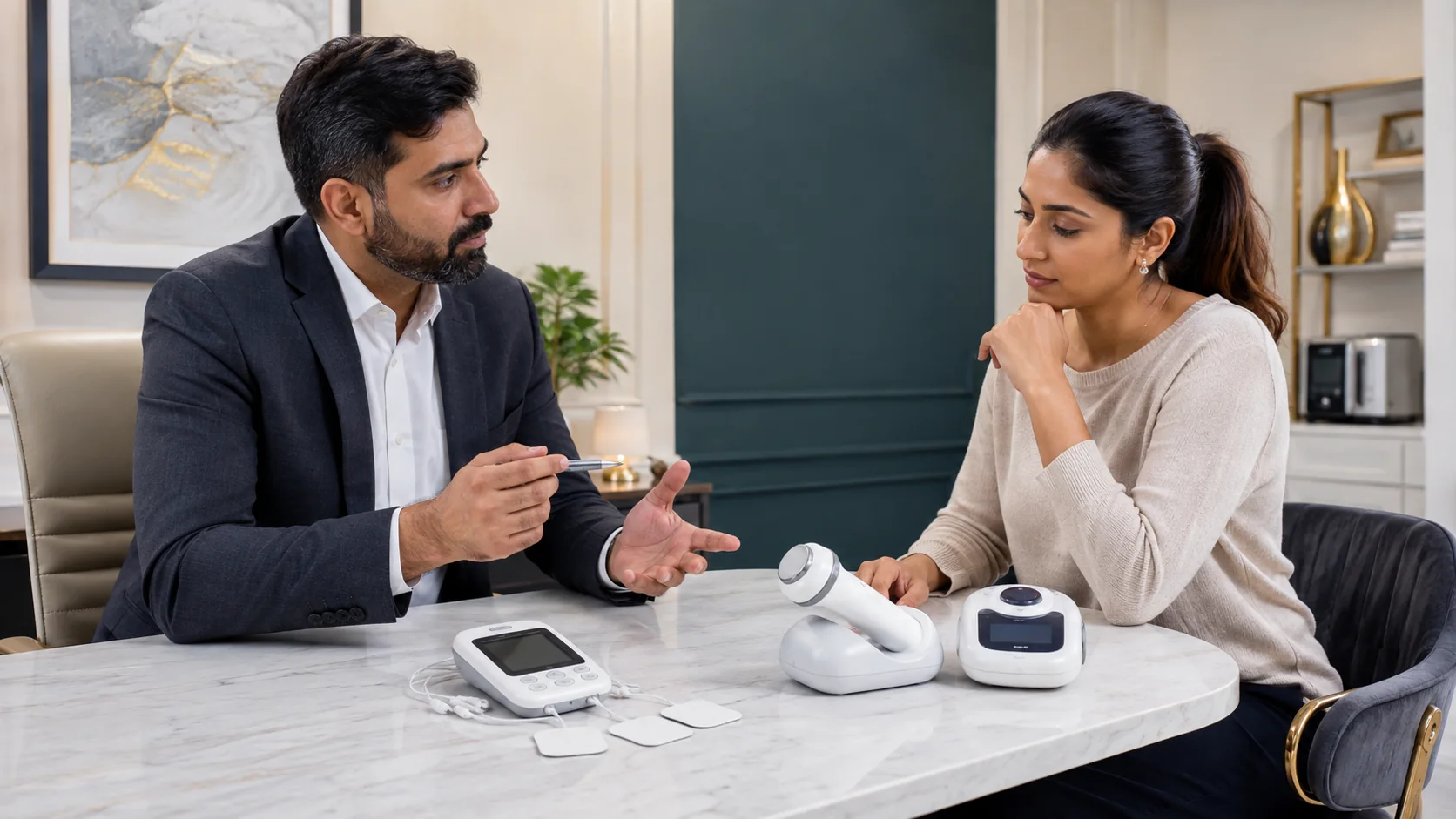
Name the exact option
Ask for the exact device or modality, its intended purpose for the appointment and who will use it. Clarify what training applies, what you may feel, how settings are chosen and which changes should stop the session.
Do not infer effectiveness from words such as advanced, electro, shockwave or ultrasound. Similar labels can refer to different devices and uses.
Before the appointment
Share relevant diagnoses, implants or electronic devices, pregnancy, skin changes, medicines, recent surgery and any new or worsening symptom through the appropriate screening process.
Ask whether the practitioner follows the device manufacturer’s instructions, including placement, settings, cleaning and maintenance.
Know how to pause immediately and which sensations are unexpected rather than something to push through.
Ask what a realistic short-term goal is and how progress will be judged without promising a cure.
Availability is a separate fact
A directory may show methods available for enquiry without confirming that every device, practitioner or service is available on a particular day. Wait for explicit confirmation before travelling.
Device-based care should not replace medical assessment when symptoms are severe, unexplained or changing.
Independent sources
FDA consumer guidance recommends understanding how a device works, following its instructions and asking the supplier or clinician questions. NCCIH’s general safety guidance recommends considering evidence and discussing complementary approaches with healthcare providers.
Appointment enquiry
Name the device or modality and your broad goal, then confirm practitioner, availability and screening before booking.