Screening
Relevant health information is reviewed before deciding whether to proceed.
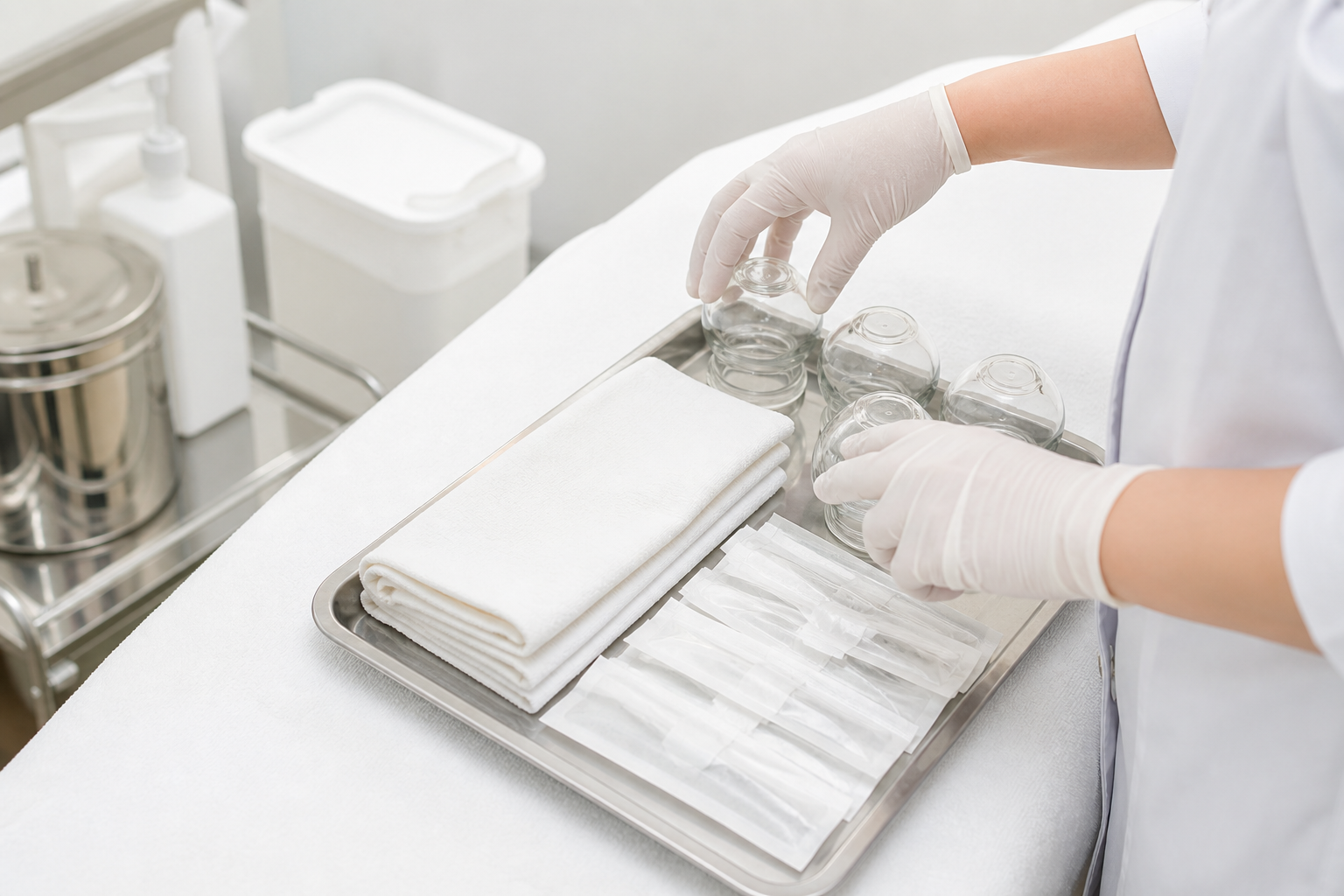
Safety & hygiene
Especially for wet cupping, good intentions cannot replace clear infection-control procedures.
Our safety framework
Relevant health information is reviewed before deciding whether to proceed.
The technique, possible effects, risks and alternatives are discussed clearly.
Hands, work areas and reusable equipment require appropriate cleaning controls.
Items intended to cut or puncture skin must be sterile, single-use and safely discarded.
You receive wound-care guidance, expected effects and warning signs.

Clear information first
Independent sources can help you separate a realistic wellness conversation from claims that research does not support.
Plan your first visitTell the practitioner
Possible effects
Cupping can cause temporary circular marks, skin discolouration, tenderness, discomfort, light-headedness or irritation. Wet cupping adds risks associated with broken skin and blood exposure, including bleeding, scarring and infection.
No website can list every individual risk. Your practitioner should discuss risks material to your context and the proposed technique.
Aftercare warning signs
Seek appropriate medical advice for persistent bleeding, increasing pain, spreading redness, swelling, pus, fever, an allergic reaction, fainting or any symptom that worries you. In an emergency, contact emergency services.
Contact the clinic as well so the concern can be documented and followed up.
A practitioner may postpone, modify or decline treatment when screening identifies a safety concern, the required hygiene controls are unavailable, consent is unclear or symptoms need medical assessment.
Appointment enquiry
Ask before booking. Include only the minimum information needed for an initial response; detailed screening happens privately.