Invasive items
Any item designed to pierce or cut skin should be sterile, used for one person and disposed of in an appropriate sharps container.
Hijama infection-control guide
Wet cupping breaks the skin and involves blood. You should be able to ask exactly what is single-use, what is reusable and how each item is handled.
Before Hijama begins
Wet cupping is not simply dry cupping with an extra step. Skin piercing and blood exposure change the safety duties.
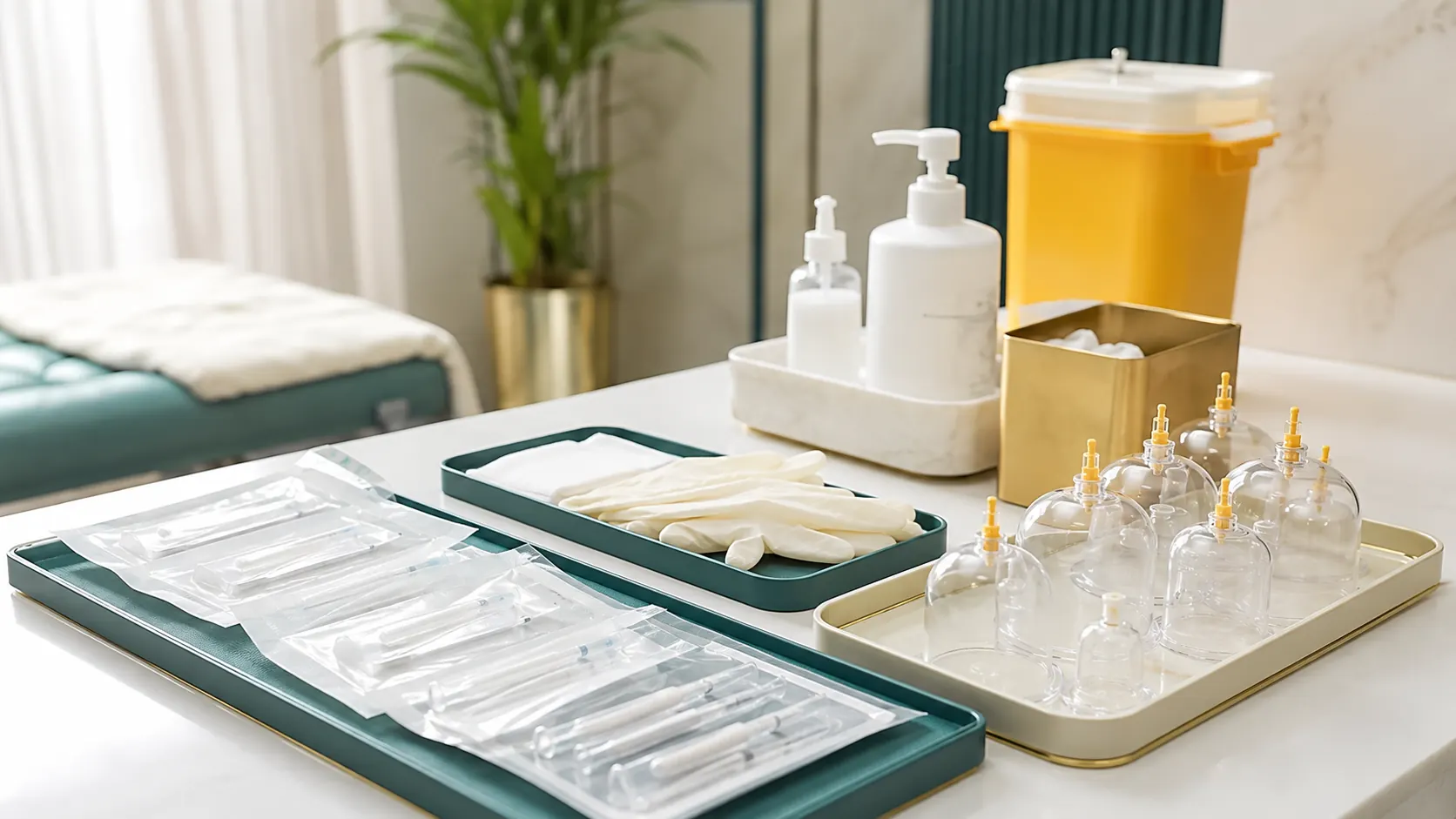
The practitioner should explain preparation, hand hygiene, protective equipment, which invasive items are sterile and single-use, how reusable items are handled, how sharps and contaminated waste are discarded and what wound care follows.
Separate the categories
Different items need different controls. The practitioner should be able to distinguish them clearly.
Any item designed to pierce or cut skin should be sterile, used for one person and disposed of in an appropriate sharps container.
Ask whether an item can contact blood and what validated cleaning, disinfection or sterilisation process applies between people.
Hand hygiene, clean preparation zones, exposure-appropriate protective equipment and safe waste handling are part of the process.
Why the details matter
NIH NCCIH warns that contaminated cupping equipment can spread bloodborne diseases when it is shared without appropriate reprocessing. CDC guidance explains the importance of aseptic technique and sterile single-use needles and syringes for invasive care.
After the session
Compare methods
It still has skin and equipment risks, but it does not add the intentional wounds created by wet cupping.
Compare wet and dry cuppingAppointment enquiry
Confirm the invasive items, cup handling, practitioner, screening and aftercare before deciding whether to book.