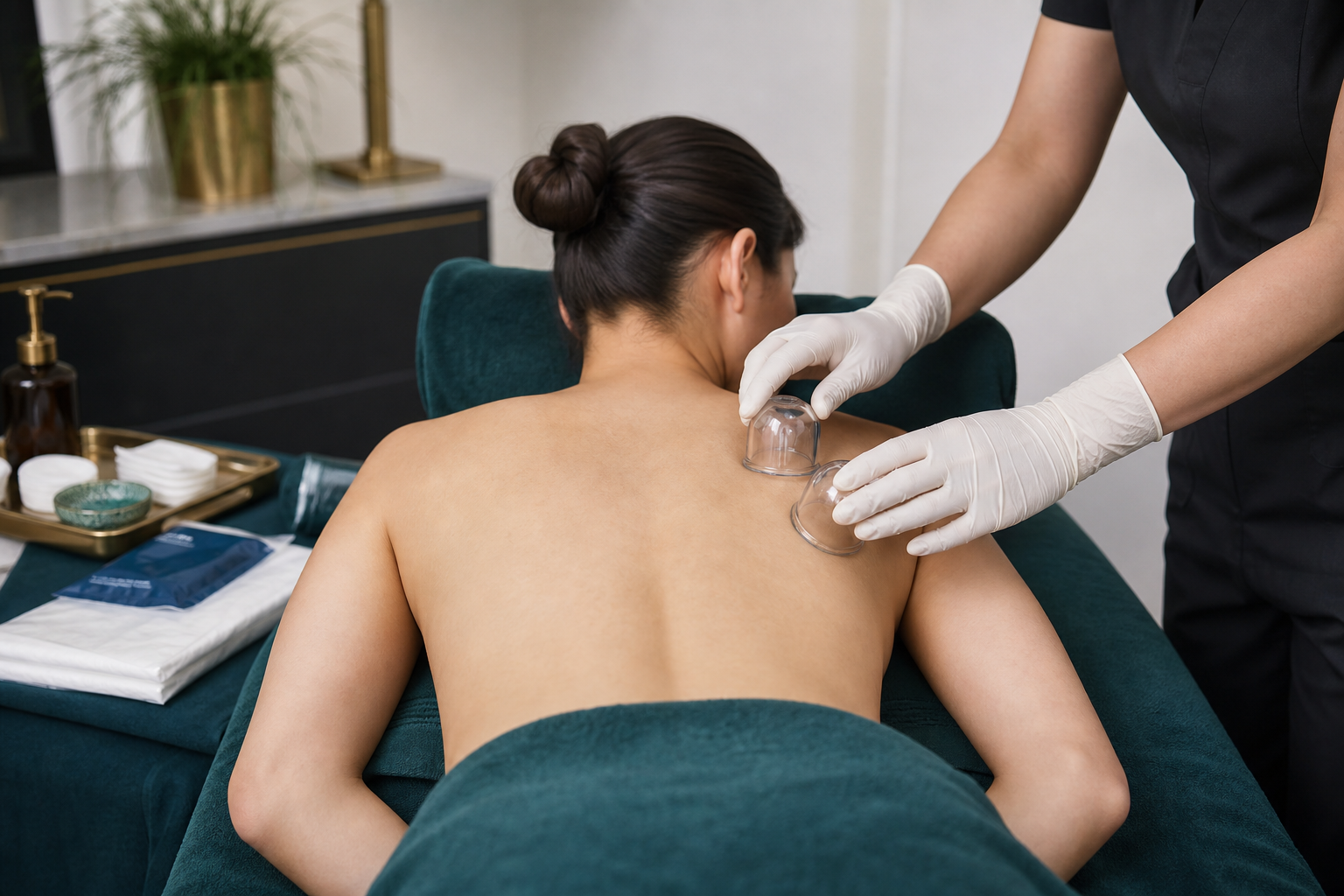
Dry cupping
Controlled suction without intentional skin incisions; temporary marks and local skin effects can still occur.
Wet-and-dry comparison guide
The defining difference is whether the skin is pierced, which changes bleeding, hygiene, equipment and aftercare requirements.
Clear answer first
Both use suction, but NIH NCCIH defines wet cupping by pierced skin and blood entering the cup, while dry cupping does not pierce skin.
Dry cupping can still cause marks, tenderness, irritation or technique-related harm. Wet cupping adds small wounds, bleeding, infection-control, sharps and healing considerations.
The choice should be based on a screened, informed discussion—not the idea that blood, pain or darker marks prove a stronger detox or better treatment.

A thoughtful visit
Take time to understand the proposed method, likely temporary effects and aftercare before you choose whether to continue.
Plan your first visitKey takeaways
Controlled suction without intentional skin incisions; temporary marks and local skin effects can still occur.
Suction plus superficial skin incisions, creating bleeding, wound-care and blood-exposure responsibilities.
Require appropriate placement, pressure, equipment handling, screening, voluntary consent and realistic outcome language.
Evidence check
NCCIH clearly separates wet from dry by whether skin is pierced and warns about bloodborne disease transmission from improperly reused contaminated equipment. CDC Standard Precautions provide the infection-control framework for expected blood exposure.
Research that pools different techniques, conditions and comparison groups cannot be converted into a universal rule that one method is best for every person.
Practical decisions
Stay safe
Breaking the skin changes the risk profile even when the incisions are described as superficial.
Frequently asked
Dry cupping avoids intentional skin incisions and the added wound and bleeding risks, but it is not risk-free. Personal suitability still requires screening.
There is no responsible universal answer. Evidence varies by condition, method and study quality, and a more invasive method is not automatically more effective.
Wet cupping should not be an unplanned add-on. It requires its own screening, explanation, infection-control process and informed consent.
Educational resource library
These guides explain choices and evidence; they do not diagnose a condition or confirm personal suitability.
Appointment enquiry
Ask for a plain-language explanation of dry and wet options, including why a method is proposed and how its risks and aftercare differ.