Expected discussion
Tightness, temporary circular marks, local tenderness or light-headedness may occur and should be explained before consent.
Risk & safety guide
Temporary marks are common, but burns, infection, scarring, persistent discolouration and blood-exposure risks also deserve a clear conversation.
Clear answer first
Dry cupping keeps the skin intact; wet cupping intentionally pierces it and therefore adds bleeding, wound and infection-control duties.
NIH NCCIH lists temporary marks and possible side effects including persistent skin discolouration, scars, burns and infection. It also notes that cupping may worsen eczema or psoriasis.
A safe discussion accounts for skin health, medicines, bleeding or healing concerns, practitioner competence, equipment handling and whether medical assessment should come first.

Clear information first
Independent sources can help you separate a realistic wellness conversation from claims that research does not support.
Plan your first visitKey takeaways
Tightness, temporary circular marks, local tenderness or light-headedness may occur and should be explained before consent.
Wet cupping adds skin breaks, bleeding, wound care, sharps and blood-exposure controls; fire-assisted methods add burn risk.
Persistent bleeding, spreading redness, pus, fever, worsening pain, fainting or another worrying change needs appropriate medical attention.
Evidence check
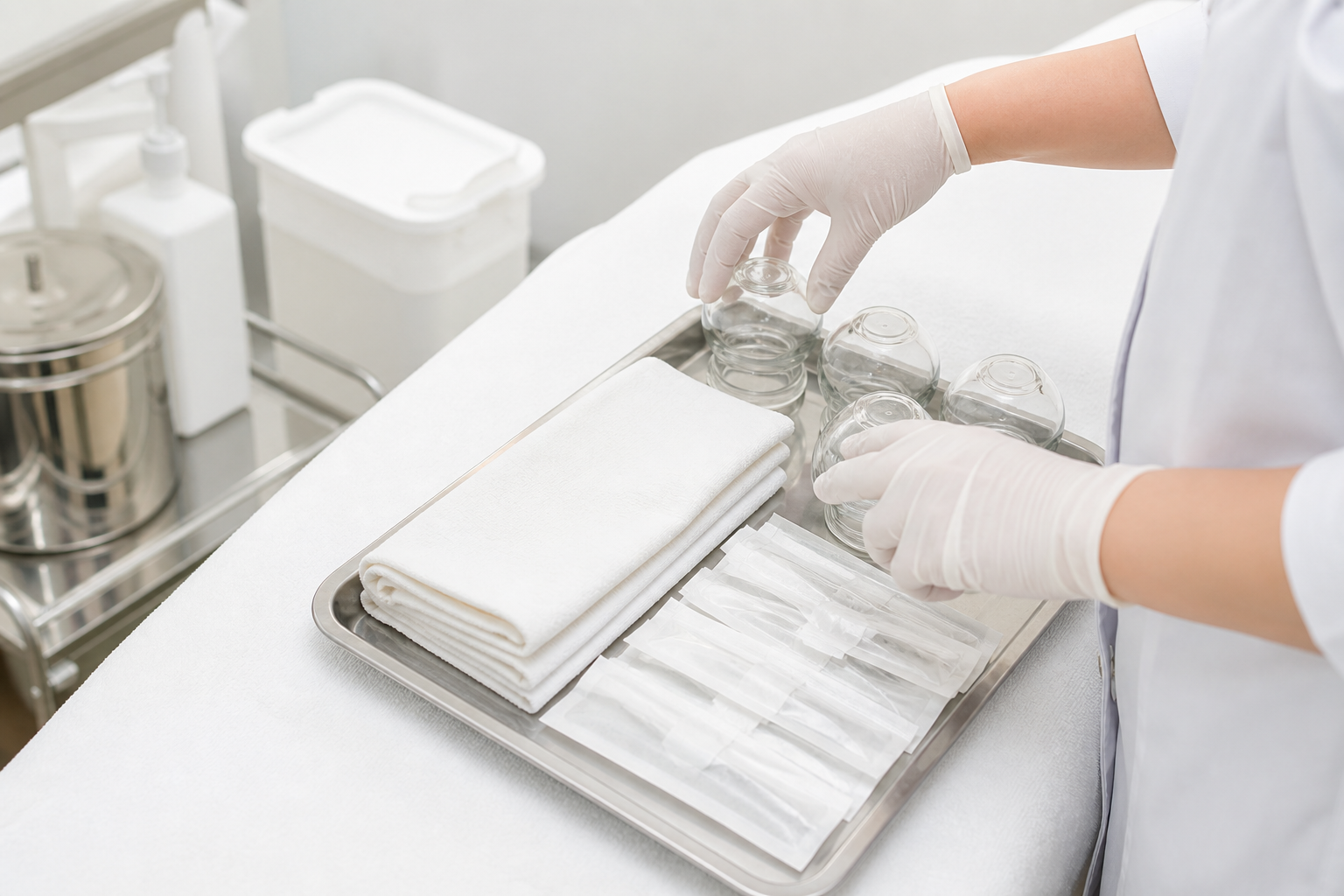
NCCIH warns that improperly reused blood-contaminated cupping equipment can spread bloodborne diseases. CDC Standard Precautions call for risk assessment, hand hygiene, appropriate protective equipment, environmental controls and correct equipment handling when exposure may occur.
A clean-looking room or a verbal claim is not proof that invasive items are sterile and single-use or that reusable equipment is reprocessed appropriately.
Practical decisions
Stay safe
Normal appearance varies, so the safer boundary is based on bleeding, pain, heat, swelling, discharge, fever and overall wellbeing—not mark colour alone.
Frequently asked
Temporary marks, local tenderness, tightness, skin irritation or light-headedness can occur. The exact pattern depends on the person and technique.
Yes. Wet cupping breaks the skin, and any contaminated equipment or poor wound care can increase infection risk. NCCIH also warns about bloodborne disease transmission from improperly reused contaminated equipment.
No. It avoids intentional skin incisions but can still cause marks, tenderness, irritation, burns in heat-assisted methods or other adverse effects.
Educational resource library
These guides explain choices and evidence; they do not diagnose a condition or confirm personal suitability.
Appointment enquiry
Tell us the technique you are considering and any relevant medicine, skin, bleeding or healing concern. A session is never confirmed from a web page alone.