Before
Hand hygiene, a clean preparation area, intact packaging and an explanation of the process should come first.
Wet-cupping hygiene guide
Wet cupping breaks the skin. Ask which items are sterile and single-use, which are reusable and how each category is handled.
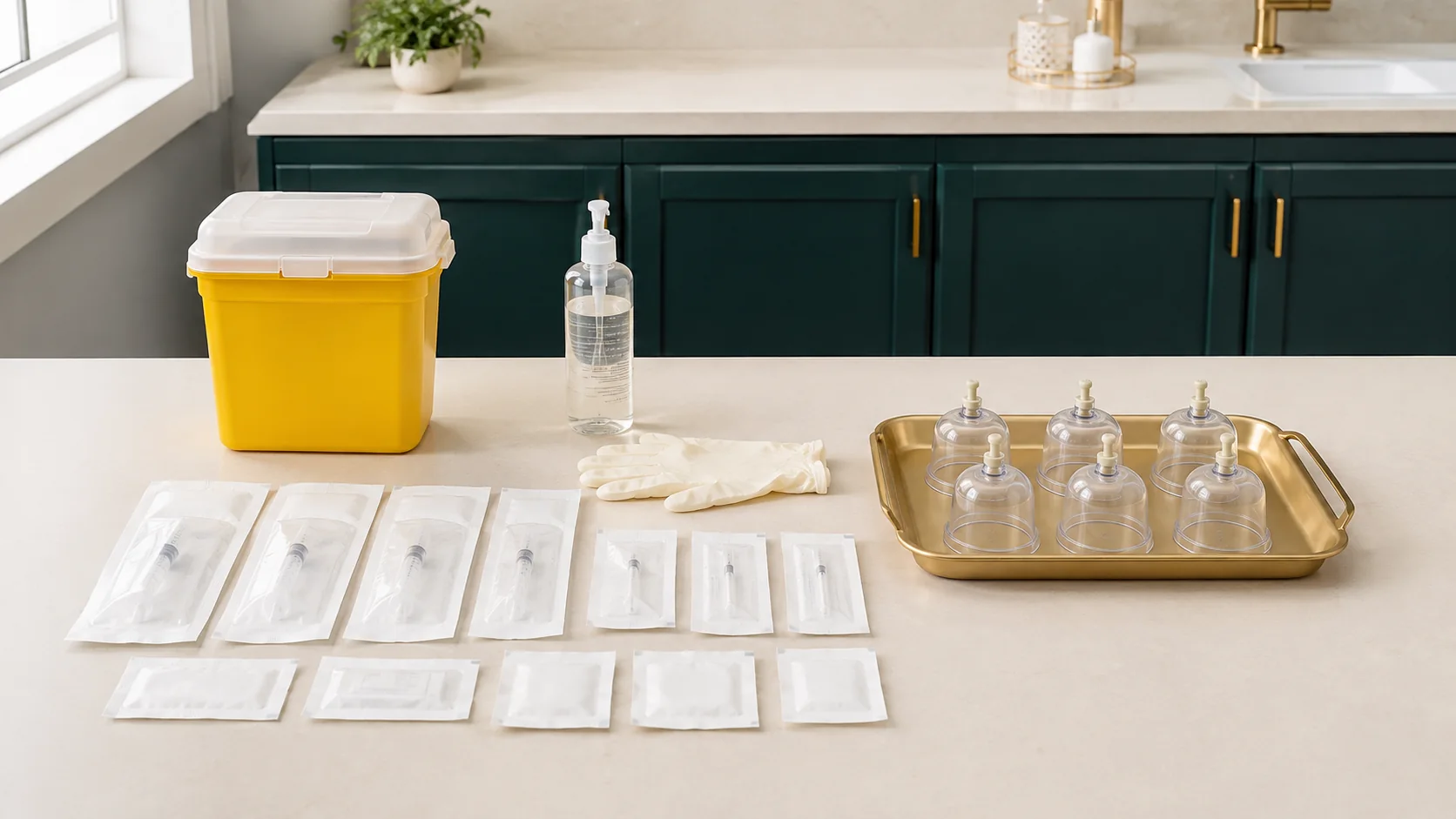
Before skin is broken
The practitioner should distinguish the item that pierces or cuts skin, other single-use supplies and equipment designed for reuse. Each category has a different handling and disposal requirement.
Do not assume that a clean-looking tray or one sealed packet answers how hands, surfaces, cups, sharps and blood-contaminated waste are managed.
Follow the complete pathway
Safe handling begins before the procedure and continues through sharps disposal, environmental cleaning and wound-care instructions.
Hand hygiene, a clean preparation area, intact packaging and an explanation of the process should come first.
Appropriate protective equipment, aseptic technique and separation of clean and used items reduce contamination risk.
Sharps and contaminated waste need safe disposal, while the visitor needs clear wound-care and warning-sign guidance.
Why the questions matter
NCCIH warns that contaminated shared cupping equipment can transmit bloodborne diseases without appropriate reprocessing. CDC guidance supports aseptic technique and a new sterile needle and syringe for each injection; the same single-use principle is a useful question for any invasive item.
Dry cupping does not intentionally break the skin, but it still requires appropriate equipment and skin hygiene.
Independent sources
Appointment enquiry
Use the checklist before booking and again before the procedure begins, especially when skin will be broken.