Share
Share your health context and identify reasons to adapt, postpone or refer.
Cupping therapy
A broad suction-based practice approached with realistic expectations, individual screening and informed consent.
What it is
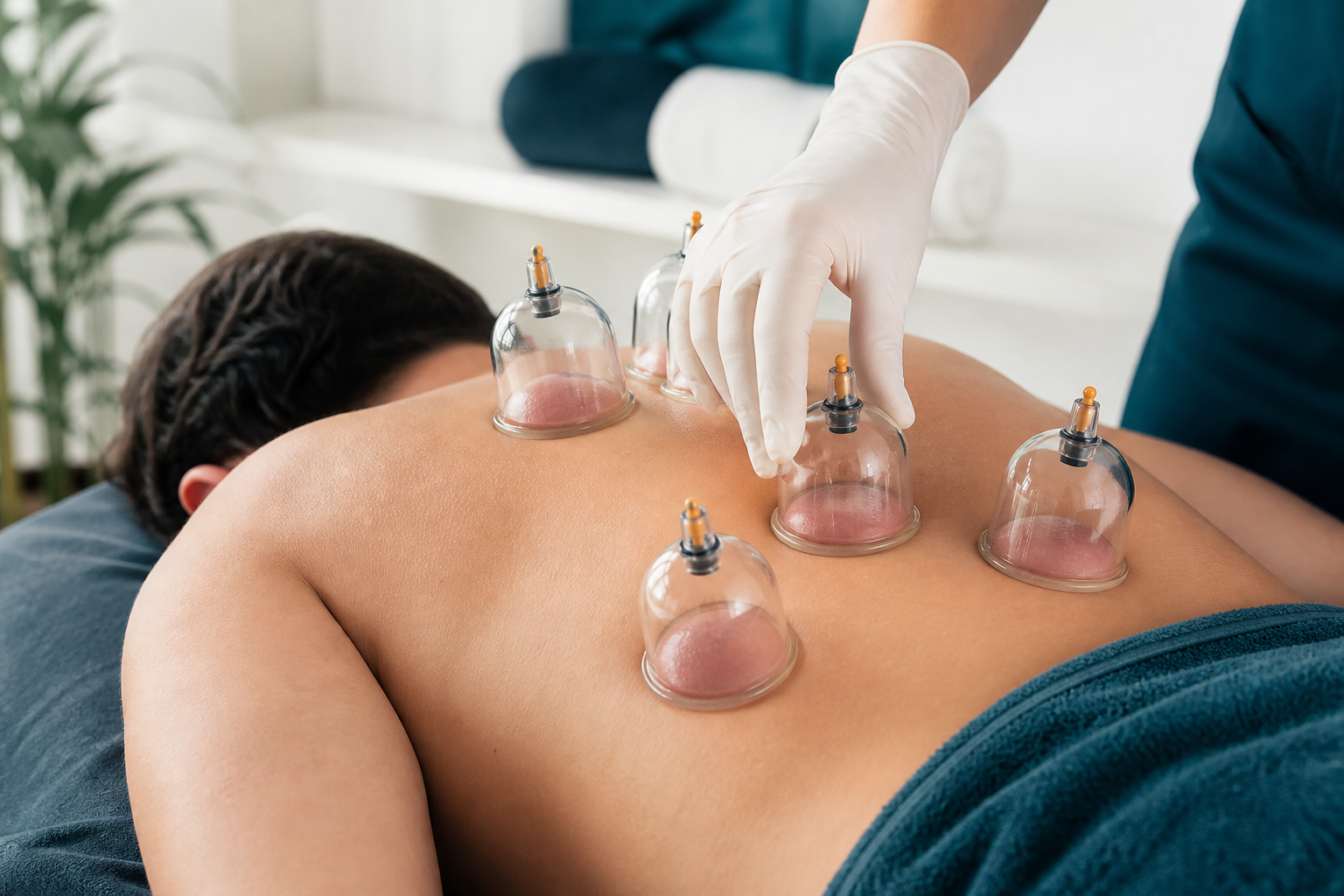
Cupping uses cups to create controlled negative pressure on the skin.
Cups may be made from glass, plastic or another appropriate material. The practitioner selects the method, placement, intensity and duration only after discussing your goal, comfort and relevant health context.
The term can include dry, moving, fire-assisted and wet techniques. Those methods are not interchangeable, and a general enquiry does not confirm which—if any—is appropriate for you.

A thoughtful visit
Take time to understand the proposed method, likely temporary effects and aftercare before you choose whether to continue.
Plan your first visitYour visit
The exact plan is chosen only after a personal conversation.
Share your health context and identify reasons to adapt, postpone or refer.
Review the proposed technique, likely temporary effects, risks and the choice not to proceed.
Receive care instructions, expected changes and warning signs before leaving.
How it may feel
Sensation varies with the method and the individual. Marks are not a reliable measure of toxins, illness or success.
Preparation
After the session
What research tells us
There has been research on cupping, including pain-related uses, but much of it is low quality. High-quality evidence is insufficient for many promoted health claims.
Cupping is complementary care. It must not delay diagnosis, emergency help or treatment recommended by a qualified medical professional.
Frequently asked
Hijama usually refers to wet cupping, which intentionally breaks the skin. Cupping therapy is a wider term that also includes non-incision methods.
Duration varies by person and method. The practitioner should explain likely temporary effects before consent.
Intensity is not a measure of quality. The plan should be based on comfort, skin response, the method and the practitioner’s assessment.
Compare techniques
Appointment enquiry
Share your wellness goal and preferred timing. Suitability and the exact method are discussed before an appointment is confirmed.