Share
Check the proposed skin area and discuss relevant health factors.
Dry cupping
Controlled suction is applied without intentionally breaking the skin, but screening and clean equipment still matter.
What it is
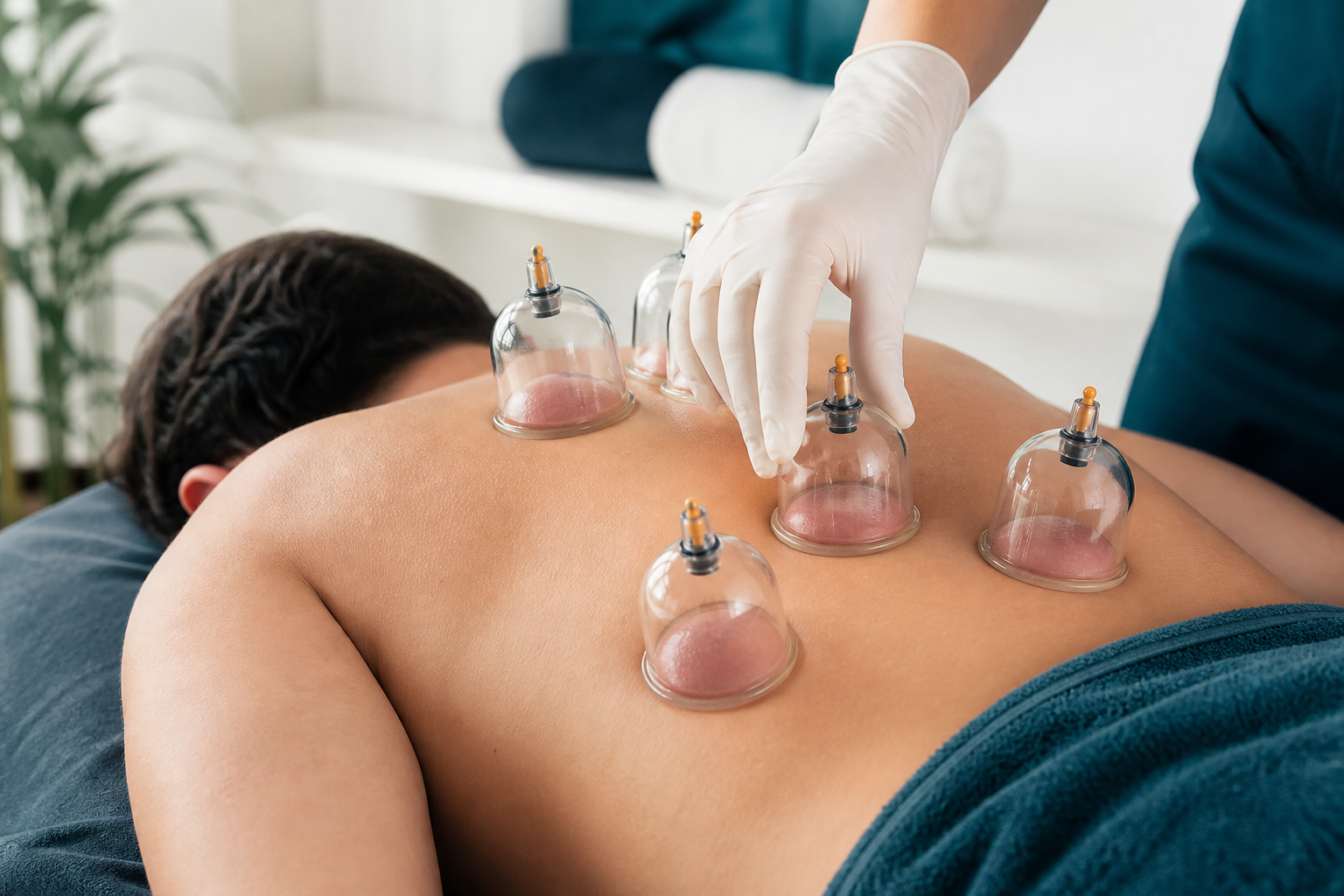
Dry cupping creates suction while keeping the skin intact.
Cups may remain in one position for a planned period. The practitioner adjusts placement, intensity and duration according to the discussion, skin response and your comfort.
Non-incision does not mean risk-free. Temporary marks, tenderness, irritation or light-headedness can still occur, and certain skin or health factors may change the plan.

A thoughtful visit
Take time to understand the proposed method, likely temporary effects and aftercare before you choose whether to continue.
Plan your first visitYour visit
The exact plan is chosen only after a personal conversation.
Check the proposed skin area and discuss relevant health factors.
Agree on placement, intensity, duration and how you will signal discomfort.
Explain temporary marks, skin care and when an unexpected change needs attention.
How it may feel
You may feel pressure or pulling. Stronger suction is not automatically better, and you can ask for the cup to be adjusted or removed.
Preparation
After the session
What research tells us
Dry cupping has been studied for pain and other uses, but study quality and methods vary. It should be described as an optional complementary practice, not a guaranteed treatment.
Cupping is complementary care. It must not delay diagnosis, emergency help or treatment recommended by a qualified medical professional.
Frequently asked
No. Dry cupping does not intentionally cut or pierce the skin.
No reliable evidence shows that mark colour measures toxins or treatment success.
Yes. Tell the practitioner if the sensation is uncomfortable; consent and comfort can be revisited at any time.
Compare techniques
Appointment enquiry
Share your comfort goal and relevant skin or health information. The exact suction plan is agreed only after screening.