Share
Review facial skin, products, recent procedures and cosmetic expectations.
Facial cupping
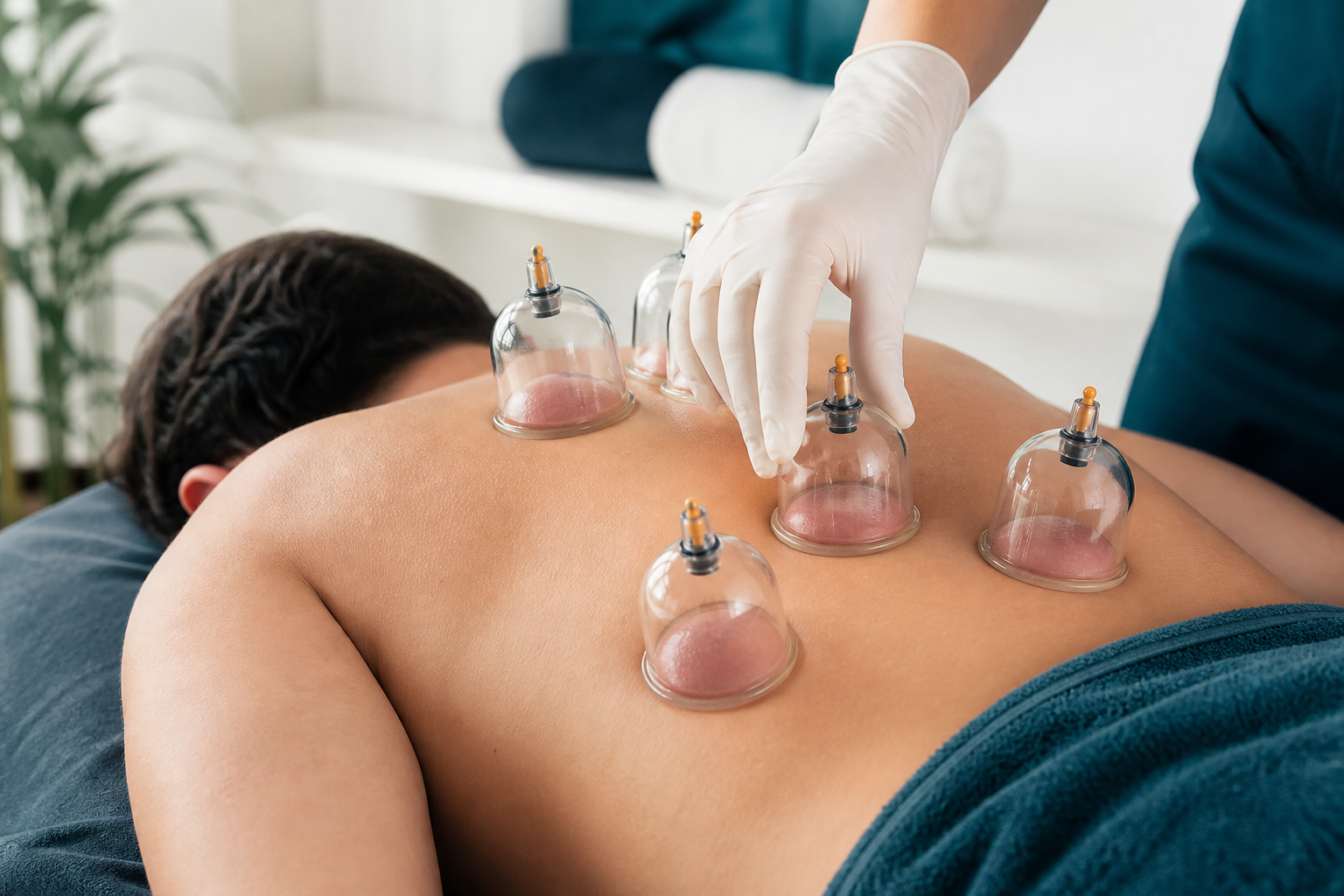
Smaller cups and lower suction may be used on facial skin, where sensitivity, privacy and cosmetic-claim accuracy matter.
This technique may not be available at every appointment. Call or WhatsApp to ask whether it is currently offered and what preparation is needed before you plan a visit.

A thoughtful visit
Take time to understand the proposed method, likely temporary effects and aftercare before you choose whether to continue.
Plan your first visitWhat it is
Facial cupping is generally described as a gentle, non-incision technique using smaller cups.
The practitioner should review current skin health, sensitivity, products and recent cosmetic or medical procedures before touching the face.
This page does not promise lifting, acne treatment, collagen production or permanent rejuvenation. Please confirm current availability only after training, products and the skin-safety process are verified.
Your visit
The exact plan is chosen only after a personal conversation.
Review facial skin, products, recent procedures and cosmetic expectations.
Agree on the area, cup, product, pressure and stop signal with no outcome guarantee.
Explain redness, irritation, product reactions and when to contact a skin clinician.
How it may feel
Suction may feel like gentle pulling. Bruising or prolonged redness is not a quality target, and visible cosmetic change cannot be guaranteed.
Preparation
After the session
What research tells us
Strong evidence for common facial-cupping cosmetic promises is lacking. The page therefore focuses on process, consent and skin safety rather than transformation claims.
Cupping is complementary care. It must not delay diagnosis, emergency help or treatment recommended by a qualified medical professional.
Frequently asked
This page does not claim that facial cupping treats acne. Active or severe skin problems may need assessment by a qualified clinician.
Bruising or redness can occur. Conservative suction and clear expectations are important on visible, sensitive skin.
Tell the practitioner exactly what procedure you had and when, and seek guidance from the treating clinician before proceeding.
Compare techniques
Appointment enquiry
This service remains behind a skin-protocol and training verification gate. Ask a general question without sending intimate facial images.